The Life of Eleanor of Aquitaine and Medieval Bordeaux
Introduction
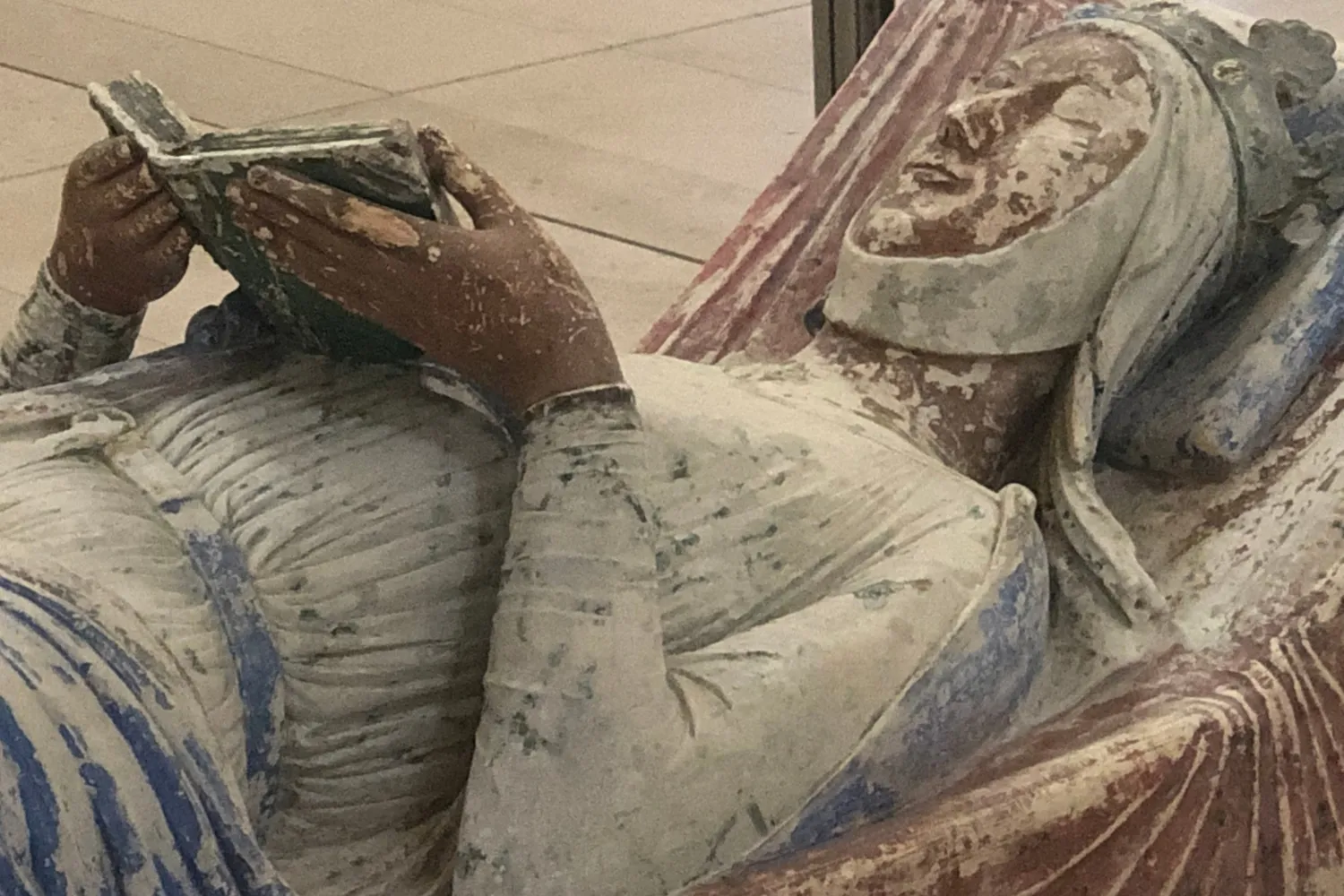
Eleanor of Aquitaine, duchess, queen, and matriarch of dynasties, remains one of the most pivotal and compelling figures in European history. Known in French as Éléonore d’Aquitaine, her legacy spans politics, culture, and diplomacy. She was not just a royal consort but a sovereign in her own right. As Duchess of Aquitaine, Queen of France and England, and mother of two kings, she left an indelible mark on medieval Europe. Her story is intricately tied to the history of Bordeaux and the broader Aquitaine region. The question "Who was Eleanor of Aquitaine?" finds its answer not only in chronicles but in the stones and stories of Bordeaux.
Eleanor was born between 1122 and 1124 and named Aliénor, meaning "the other Aénor," in honour of her mother. While historians dispute her exact birthplace—suggesting Poitiers, Belin, or Bordeaux’s Palais de l’Ombrière—her connection to Bordeaux is undisputed. This city, already a centre of trade and culture, played a critical role in her early education and later political presence. From a young age, Eleanor of Aquitaine's history was shaped by the traditions of the Duchy of Aquitaine, which traced its roots back to the Carolingians. After the death of her father, William X, Eleanor inherited one of the largest and most prosperous domains in France.
Early Life and the Role of Bordeaux
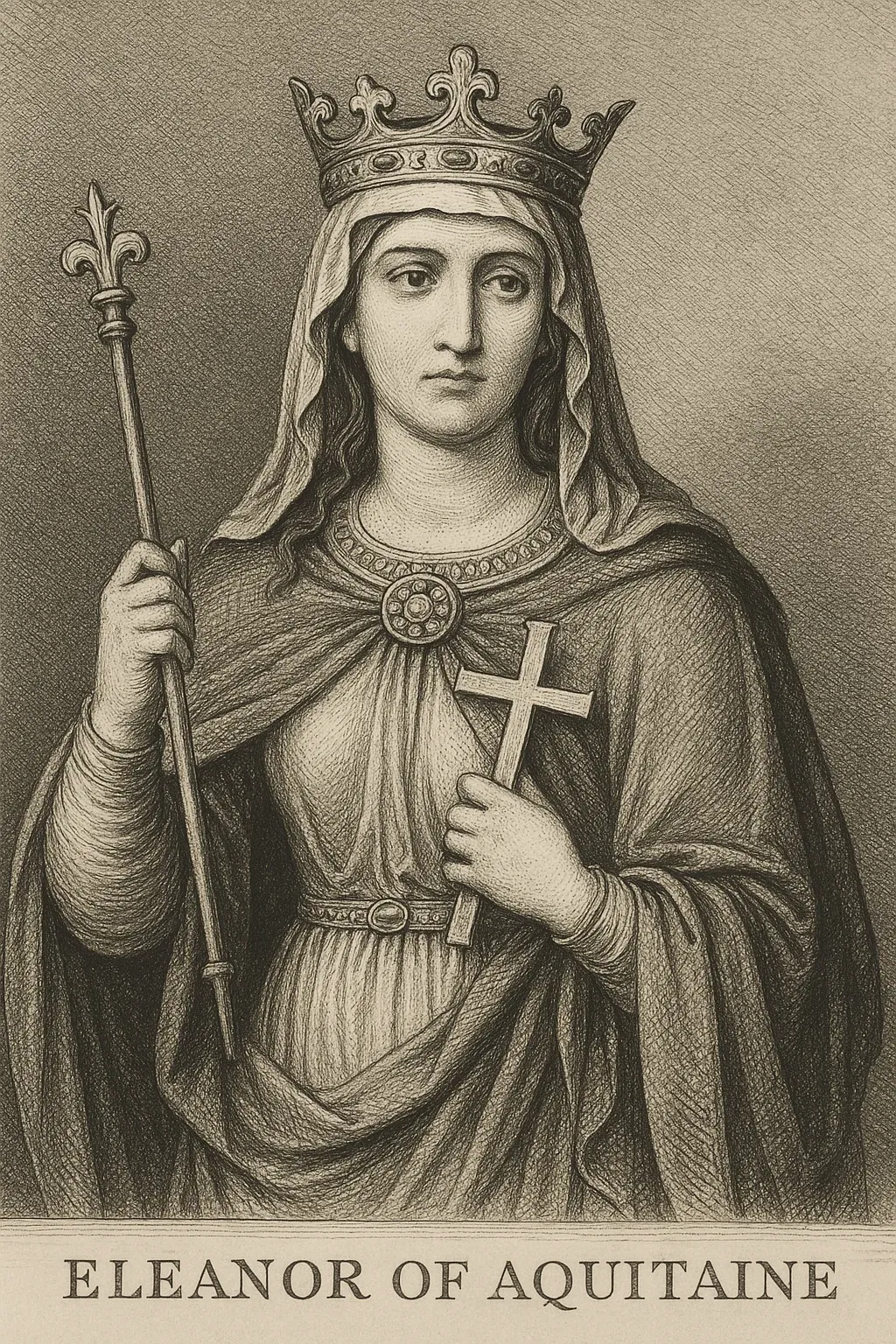
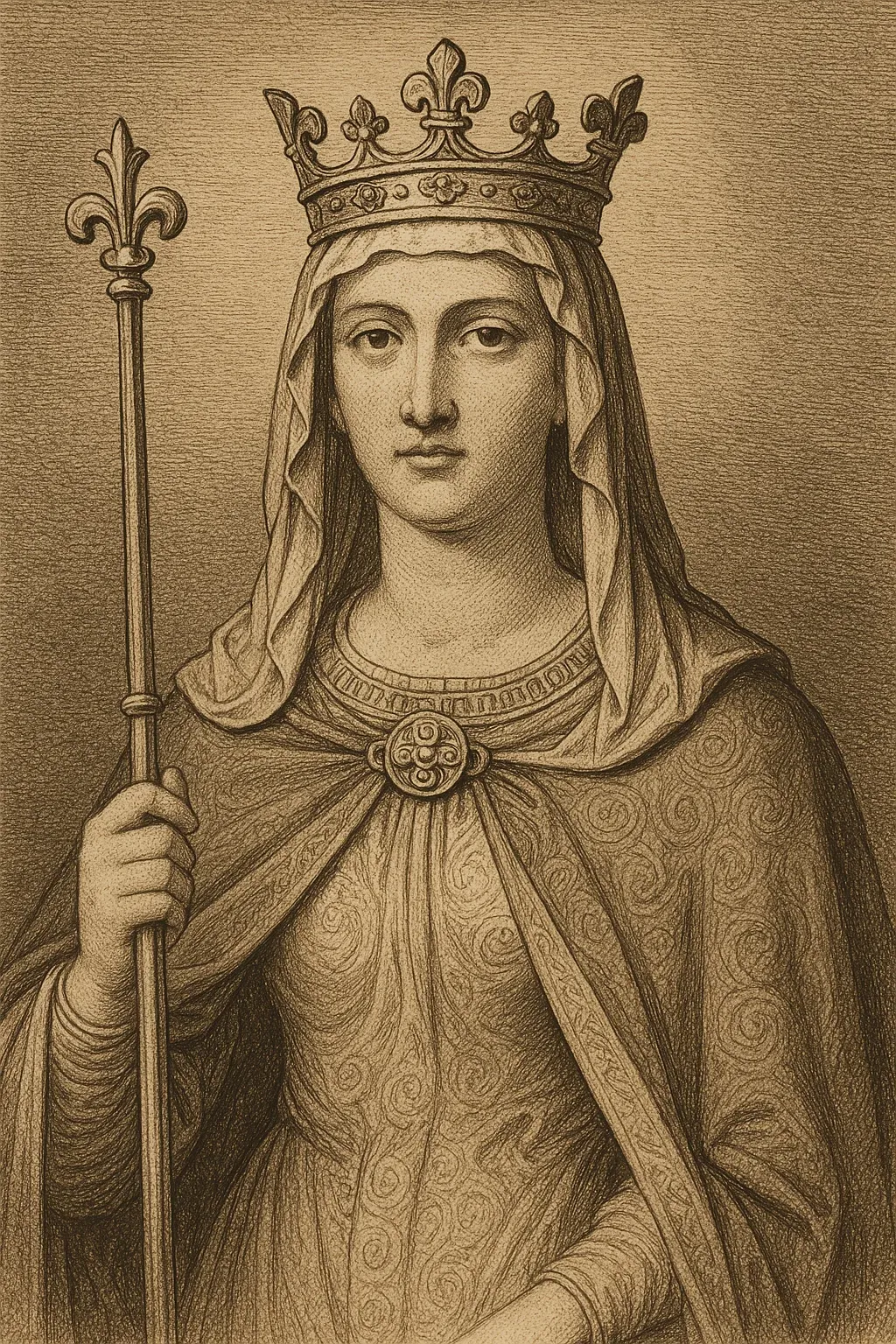
Eleanor of Aquitaine grew up surrounded by the richness of Aquitaine's heritage. The duchy, stretching from the Loire River to the Pyrenees and from the Atlantic to the Massif Central, was not only vast but deeply cultured. Her grandfather, William IX, was the first known troubadour and a key patron of the poetic movement that would become synonymous with courtly love. This tradition permeated Bordeaux, the administrative and cultural heart of the duchy. Bordeaux's medieval history was steeped in Roman foundations—then known as Burdigala—and its strategic location along the Garonne River made it a vibrant hub for trade and communication.
From an early age, Eleanor was immersed in a world of literature, philosophy, music, and governance. She spoke the Langue d’Oc, or Occitan, a lyrical and expressive tongue more closely related to Catalan and Italian than northern French dialects. The cultural sophistication of southern France was a stark contrast to the austere and ecclesiastical tone of northern courts. This education prepared her for the challenges of rule and the dynamics of international politics. Her court in Bordeaux exemplified a blend of refinement and power, where poets, clerics, nobles, and emissaries converged.
The economic power of Bordeaux also contributed to Eleanor’s influence. The export of wine—particularly the early form of claret—was already well established, and salt routes provided additional revenue. Eleanor understood the significance of Bordeaux’s prosperity and ensured it remained a centre of commercial and political strategy throughout her life. As the future Duchess of Aquitaine, she was often present in key city locations such as the Palais de l’Ombrière, a major site in Eleanor of Aquitaine's Bordeaux history and still part of Eleanor of Aquitaine walking tour itineraries today.
You can learn more about this historic ducal residence in our detailed guide to the Palais de l’Ombrière in Bordeaux, which explores its medieval role and architectural legacy.
Bordeaux’s cosmopolitan atmosphere allowed Eleanor to absorb a broad array of ideas. The city welcomed merchants from across Europe, and its schools offered instruction in Latin, theology, and the liberal arts. The status of women in Aquitaine, while still bound by medieval norms, allowed for more agency and visibility than in the north. Eleanor thrived in this setting and adopted a vision of leadership rooted in Aquitaine’s distinct identity.
As she approached adolescence, Eleanor’s political significance increased. She was betrothed to Louis VII, heir to the French throne, after her father’s sudden death on pilgrimage in 1137. This alliance was intended to bring Aquitaine under royal control, though the duchy remained legally separate. Her marriage to Louis was conducted in Bordeaux at the Cathedral of St. André, one of the most important Eleanor of Aquitaine sites in Bordeaux, and celebrated with elaborate ceremonies that highlighted her city’s status.
The fusion of Bordeaux's royal history with that of the French crown marked the beginning of a complex and often turbulent journey for Eleanor. Though young, she had already demonstrated political acumen, cultural leadership, and a fierce independence that would define her role in the shaping of medieval Europe.
Marriage to Louis VII and the Second Crusade
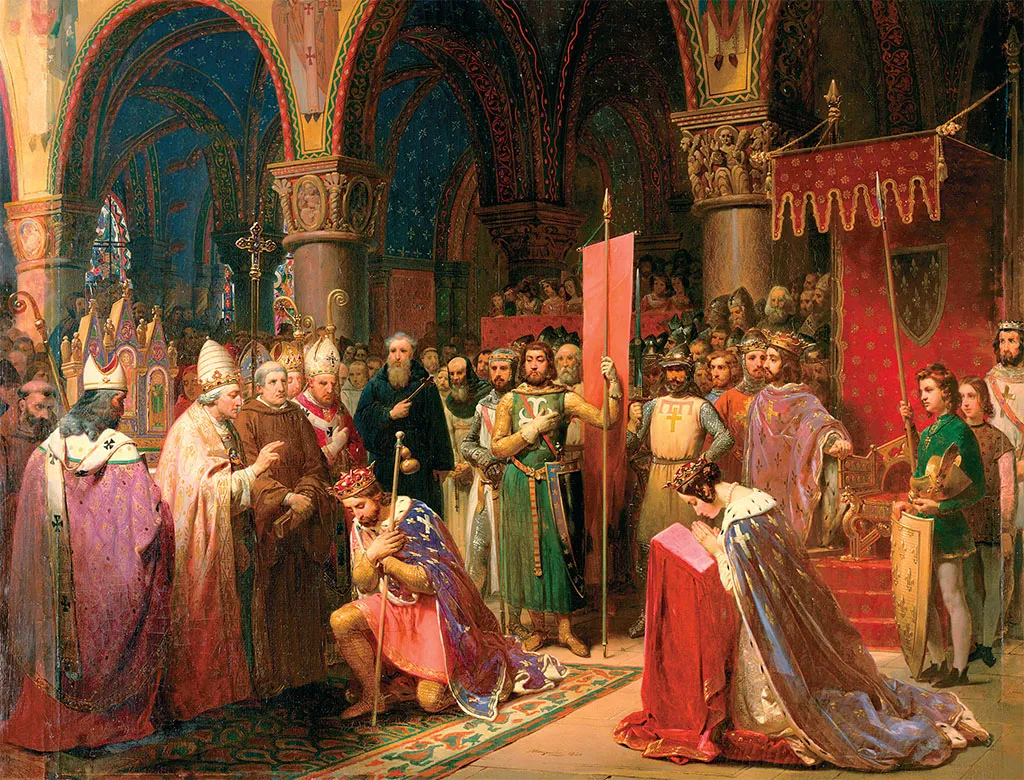
On 25 July 1137, Eleanor of Aquitaine married Louis the Younger at St. Andrew’s Cathedral in Bordeaux. Just weeks later, Louis became Louis VII, King of France. At fifteen, Eleanor became Queen of France and remained Duchess of Aquitaine in her own right. This union brought two of France’s most powerful territories together, though tensions between royal centralisation and Aquitaine autonomy would haunt their relationship.
The early years of their marriage were filled with ceremonial duties and attempts to bridge cultural gaps between the North and South. Eleanor tried to introduce the refined tastes of Aquitaine into the Parisian court—troubadours, courtly language, and southern etiquette—but was met with suspicion. Her independent spirit clashed with the pious and conservative nature of her husband.
Eleanor and Louis’s marriage produced two daughters, but no male heir, a matter of dynastic urgency in medieval France. Seeking spiritual merit and political clout, Louis committed to leading the Second Crusade. Eleanor, as Duchess of Aquitaine and a deeply devout Christian, insisted on joining him, making her one of the rare royal women of medieval France to undertake such a journey.
Eleanor of Aquitaine's history took a dramatic turn during the crusade. Their contingent departed in 1147, and Eleanor brought with her a retinue of Aquitainian nobles, ladies, and even troubadours. These actions scandalised many, who accused her of treating the crusade as a courtly parade. Her behaviour and the unorthodox role she assumed—leading troops at times and negotiating with princes—provoked criticism.
In Antioch, hosted by her uncle Raymond of Poitiers, Eleanor advocated for aiding the crusader states in the Levant rather than marching to Jerusalem. Her influence in the strategy discussions and her close relationship with Raymond led to accusations of impropriety. Louis forced her to continue the journey, worsening their already-strained relationship. Eleanor of Aquitaine walking tour guides in Bordeaux often recount the fallout from this campaign as a turning point in her royal career.
The crusade failed to meet its objectives. The couple returned separately to France in 1149, embittered and publicly distant. Their marriage unravelled quickly. The absence of a male heir and political disagreements allowed Eleanor to seek an annulment. In 1152, their marriage was formally dissolved on the grounds of consanguinity, though political motives were the true driver.
Following the annulment, Eleanor regained control of her lands. Her swift and strategic remarriage to Henry Plantagenet just weeks later set the stage for an even larger and more volatile empire. But her time as Queen of France had reshaped her political outlook. She had witnessed crusading failures, survived court intrigue, and emerged with greater political resolve.
This period cemented Eleanor’s position among the most politically engaged and ambitious medieval queens of Europe. It also marked Bordeaux’s last moment as a city under French sovereignty for more than three centuries. The next phase of Eleanor’s life would bind the city even more closely to the English crown.
The Plantagenet Alliance and the Angevin Empire
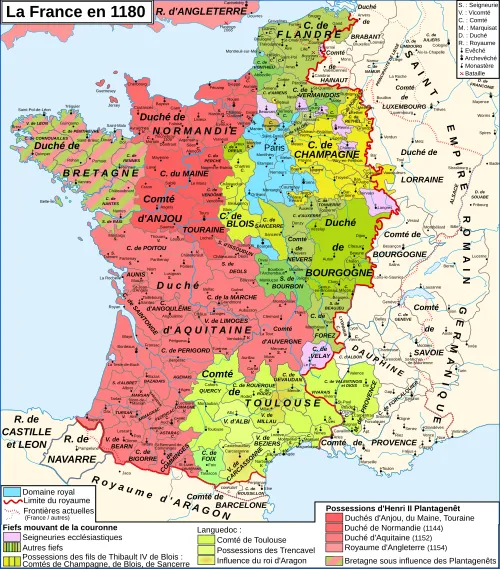
Just weeks after her annulment from Louis VII, Eleanor of Aquitaine married Henry Plantagenet, Duke of Normandy and Count of Anjou, on 18 May 1152. This rapid and strategic union shocked the French court. Henry, ten years Eleanor’s junior, was a rising political force—soon to be crowned King Henry II of England in 1154. Their marriage united two of the most powerful dynastic houses in Western Europe and laid the foundation for the Angevin Empire, a sprawling realm that stretched from the Scottish borders to the Pyrenees.
Eleanor of Aquitaine France, was now deeply intertwined with England. As Queen of England and Duchess of Aquitaine, Eleanor maintained her authority over her own domains, ensuring Aquitaine was not subsumed into the English Crown’s holdings. Bordeaux's royal history thus entered a new phase, tied to the fortunes of the English monarchy but retaining its distinctive Gascon identity. Eleanor continued to administer her duchy independently and travelled frequently between her territories.
The Eleanor of Aquitaine marriage to Henry II produced eight children, three of whom—Henry the Young King, Richard the Lionheart, and John—would become central to English history. Eleanor’s influence in shaping the Plantagenet dynasty was profound. She arranged marriages, managed inheritances, and oversaw courtly education. Her favourite son, Richard, inherited both her political skills and her loyalty.
Yet the marriage between Eleanor and Henry was turbulent. Henry’s infidelities, especially his long affair with Rosamund Clifford, strained their bond. More importantly, Eleanor resented Henry’s attempts to centralise power and diminish her political independence. Around 1170, she withdrew to Poitiers and revitalised her court as a cultural centre. There, she revived the ideals of courtly love and welcomed poets, troubadours, and scholars. This cultural flowering remains one of the most celebrated aspects of Eleanor of Aquitaine's legacy.
In 1173, Eleanor encouraged her sons to rebel against their father. Known as the Revolt of the Young Kings, the rebellion included Henry the Young King, Richard, and Geoffrey. Although the revolt ultimately failed, it showcased Eleanor’s enduring political agency. She was captured en route to Paris and imprisoned by Henry, who confined her in various castles—Winchester, Salisbury, and Chinon—for fifteen years.
During this period, Eleanor’s direct involvement in Aquitaine was limited, but her reputation only grew. Chroniclers and court poets began to shape the mythos of Eleanor of Aquitaine's culture and power. Despite her captivity, she remained a symbolic figure of resistance and authority, especially in Bordeaux and Poitiers.
When Henry II died in 1189, Richard the Lionheart ascended the throne and immediately freed his mother. Eleanor was nearly seventy but resumed an active role in governance. She arranged Richard’s coronation, purged corrupt officials, and even held the regency in his absence.
As Queen Mother and dowager duchess, Eleanor’s influence in Europe had never been greater. She governed England while Richard embarked on the Third Crusade, and she negotiated with France and the papacy to protect his interests. Her capacity to govern during crisis, her deep involvement in the Anglo-French balance of power, and her resilience in adversity secured her place as one of the most powerful royal women in history.
Regency, Legacy, and Final Years
Eleanor of Aquitaine’s return to political prominence under Richard the Lionheart was nothing short of remarkable. As regent of England during his absence on the Third Crusade (1189–1192), she acted with the authority and effectiveness of a ruling monarch. Her administrative decisions during this time—such as releasing political prisoners, securing loyalist support, and overseeing fiscal matters—are a crucial part of Eleanor of Aquitaine's legacy.
Her most visible role came during Richard’s captivity in Austria, following his capture by Duke Leopold V in 1192. Eleanor wrote passionately to Pope Celestine III, criticising the pontiff’s inaction and pleading for support. She oversaw the enormous effort to raise the ransom: 150,000 silver marks, the equivalent of two to three years of England’s income. Personally delivering the first 100,000 marks to Emperor Henry VI in Mainz in 1194, Eleanor guaranteed her son’s release.
Eleanor and Richard the Lionheart shared a deep political bond. Richard entrusted her not only with regency powers but also with safeguarding the Plantagenet interests in France. As Queen Mother, she negotiated directly with Philip II of France and acted decisively against her younger son John, who had plotted to seize power in Richard’s absence.
After Richard’s death in 1199, Eleanor supported John Lackland’s claim to the throne. Despite his poor reputation, Eleanor’s backing secured baronial loyalty in Aquitaine and England. She toured her duchy at the age of 77 to consolidate support and even paid homage to King Philip II of France, a tactical move to defend her grandson’s inheritance from Arthur of Brittany.
In 1200, Eleanor travelled to Castile to select a granddaughter—either Urraca or Blanche—for marriage to Louis VIII of France. Despite her age and the hazards of medieval travel, she made the long journey across the Pyrenees and chose Blanche, whom she considered best suited for life in the French court. Her choice would have far-reaching implications: Blanche of Castile would become a powerful regent of France and the mother of Saint Louis.
On her return journey, Eleanor was captured by Hugh IX of Lusignan and released only after conceding the County of La Marche. Shaken by the murder of her loyal squire Mercadier in Bordeaux and weary from decades of travel and conflict, Eleanor returned to Fontevraud Abbey, the monastic house she had long patronised.
In 1202, her nephew Arthur of Brittany besieged her in the fortress of Mirebeau. John launched a rapid campaign to rescue his mother, capturing Arthur in the process. Eleanor, then 80, withdrew permanently to Fontevraud Abbey, where she likely took religious vows in her final years. There she continued to advise and correspond until her death on 1 April 1204.
Eleanor of Aquitaine's tomb lies in the abbey church at Fontevraud, alongside those of her second husband, Henry II, and her son Richard. Her effigy shows her holding a book, a symbol of wisdom, learning, and cultural patronage. It stands as a lasting tribute to one of the most influential royal women in history.
Eleanor’s death occurred just as the Angevin Empire was beginning to fragment. Nevertheless, Eleanor of Aquitaine's history remained embedded in the administrative and cultural memory of Aquitaine, particularly in Bordeaux. Her legacy as a duchess, queen, regent, and mother of kings ensured her place not only among the Bordeaux historical figures but also in the broader narrative of medieval queens of Europe.
Eleanor and Bordeaux in Historical Memory
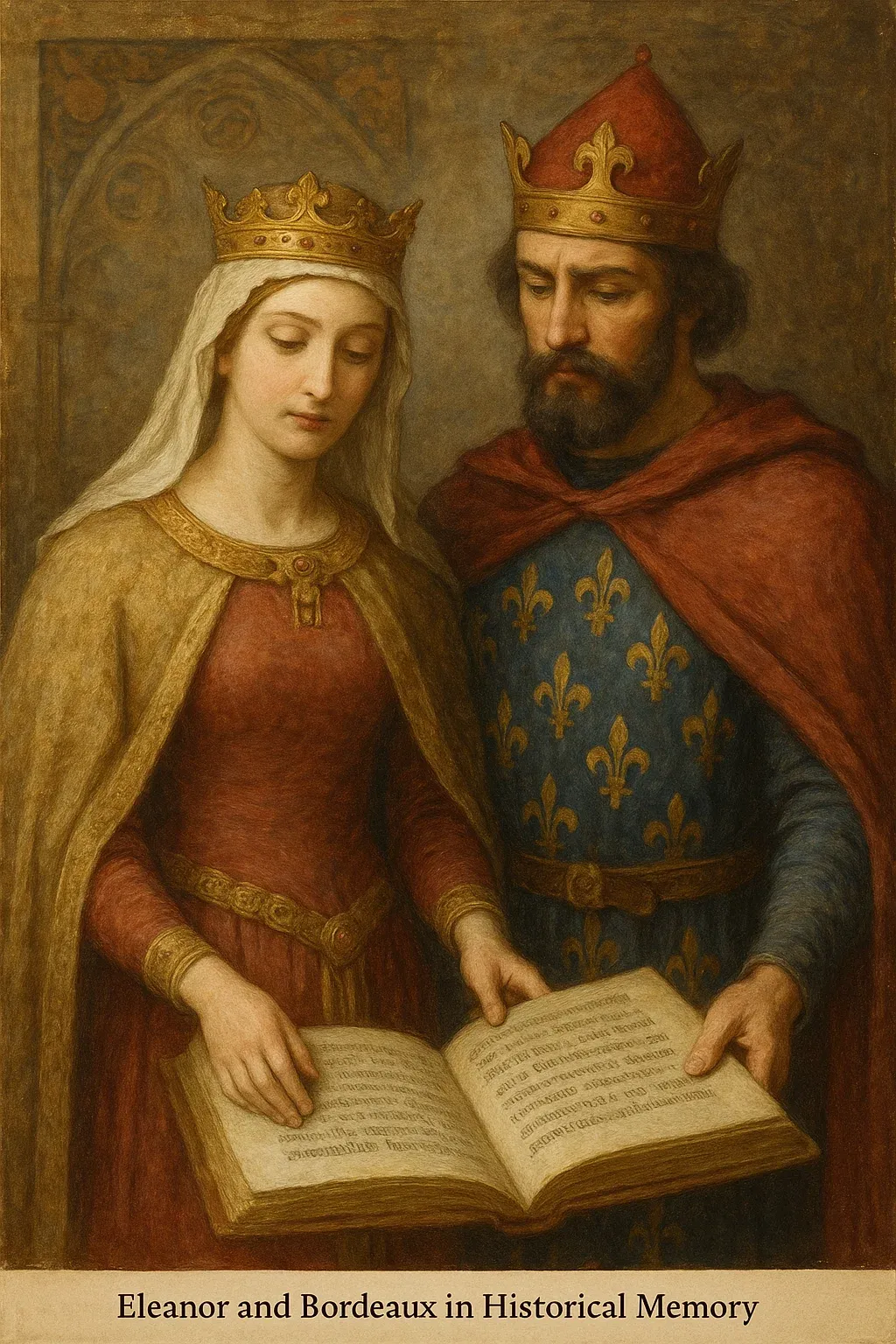
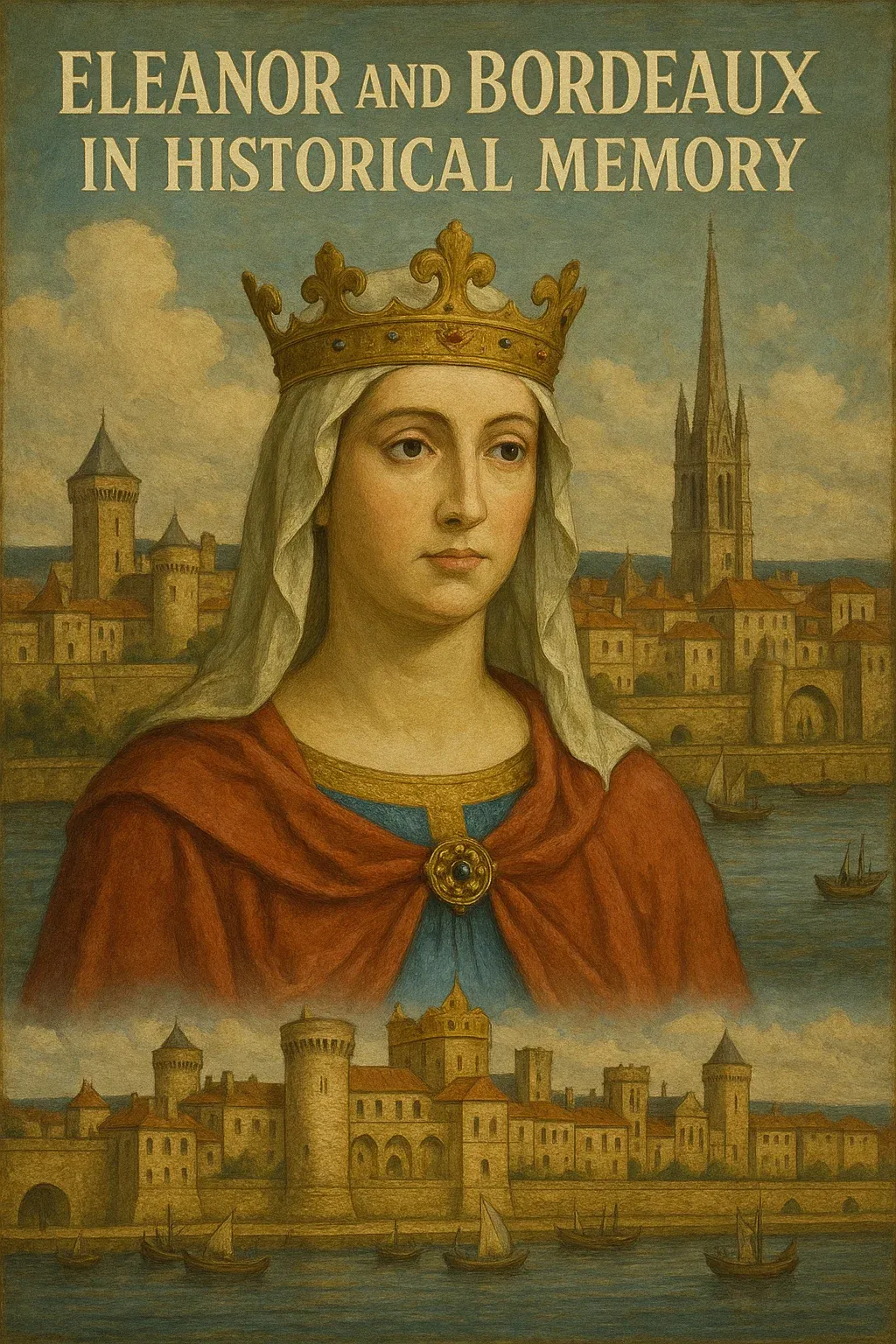
Eleanor of Aquitaine’s presence in Bordeaux extended beyond her lifetime. As the capital of the Duchy of Aquitaine and a vital hub of the Angevin Empire, the city retained deep ties to Eleanor and her successors. She frequently held court in Bordeaux, conducted political negotiations, and appointed local administrators. Bordeaux's historical figures regularly interacted with Eleanor’s ducal court, and her governance helped maintain the city's status as one of the most influential in southwestern France.
The architectural legacy of Eleanor’s time includes parts of the Palais de l’Ombrière, where she presided over ducal affairs, and the Cathedral of Saint-André, where she was married. These remain major Eleanor of Aquitaine sites in Bordeaux and are featured prominently on Bordeaux historical tours. The Grosse Cloche, one of the oldest belfries in France, also traces its foundations to this medieval period. Visitors walking through the city’s cobbled streets and Gothic remnants can still experience the atmosphere of Eleanor’s Bordeaux.
Today, Eleanor of Aquitaine walking tour options often focus on these medieval landmarks. These tours explore how Eleanor shaped Bordeaux's medieval history through governance, cultural patronage, and political diplomacy. The Eleanor of Aquitaine cathedral, as Saint-André is now sometimes called in local tourism material, serves as a symbol of her enduring connection to the city.
Beyond its physical landmarks, Bordeaux retains the cultural traces of Eleanor of Aquitaine's culture. The emphasis on art, wine, language, and diplomacy that characterised her court continues to shape the city’s identity. Her influence is evident in modern Chartrons, the district historically tied to Bordeaux's merchants and ducal administration. Eleanor of Aquitaine's connections form part of the story that positions Bordeaux as both a cultural and commercial bridge between England and France.
The Bordeaux royal history tied to Eleanor continued through the Hundred Years’ War, during which the city remained loyal to the English crown. This loyalty was largely due to the political structures and allegiances established during Eleanor’s lifetime. It was not until 1453, nearly 250 years after Eleanor’s death, that Bordeaux returned definitively to French control following the Battle of Castillon.
In historical and cultural tourism, Eleanor of Aquitaine France, is now a unifying theme that bridges local history with broader European narratives. Her impact on Bordeaux, both as a governing duchess and symbolic figure, continues to attract historians, writers, and travellers. She remains one of the most prominent women of medieval France and a defining figure in Aquitaine's heritage.
For those looking to immerse themselves in Eleanor’s world, Bordeaux Free Walking Tours offers guided experiences that bring her story to life. These Bordeaux historical tours include not only the architectural highlights but also the political, cultural, and personal episodes that make Eleanor of Aquitaine's history essential to understanding medieval Bordeaux.
Cultural Legacy and Popular Memory
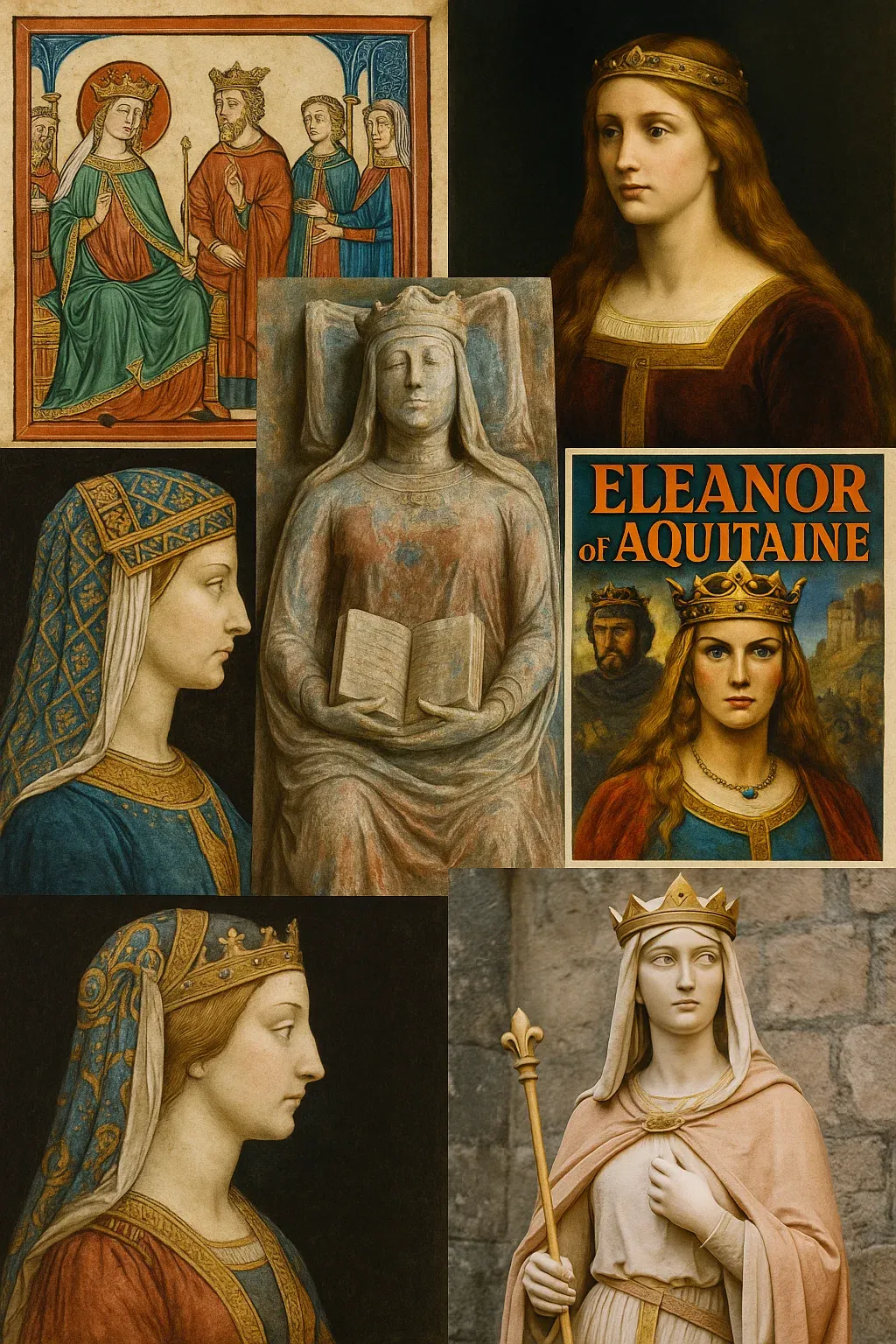
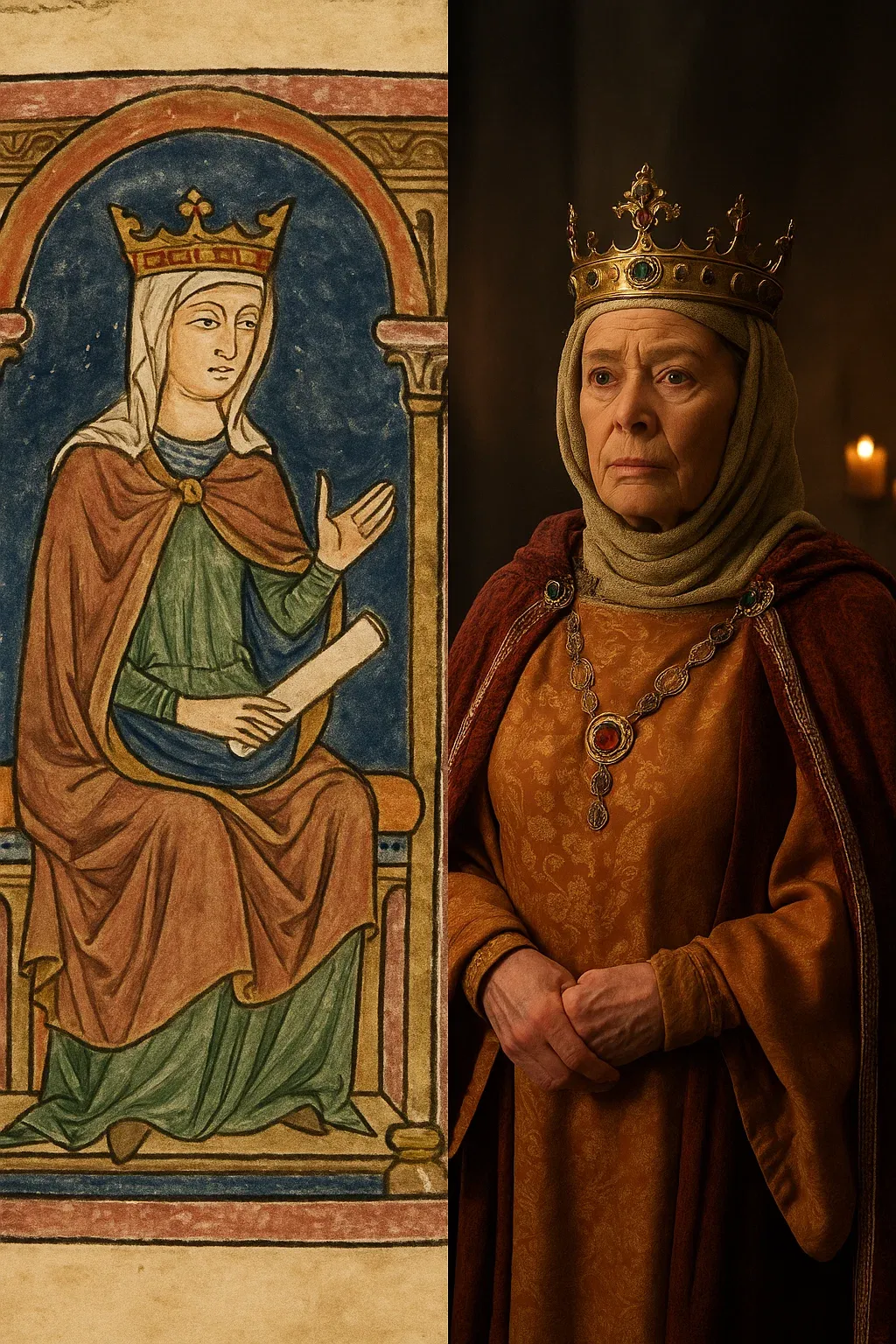
The legacy of Eleanor of Aquitaine has endured for centuries, evolving from medieval chronicles to modern cultural memory. Writers, poets, historians, and filmmakers have interpreted her life through many lenses—romanticised, scandalised, and idealised—creating a complex and enduring portrait of a powerful medieval woman. As both Eleanor Plantagenet and Éléonore d’Aquitaine, she remains a figure of fascination not only in France and England, but across Europe and beyond.
Her image appears frequently in medieval literature, often as a symbol of wisdom and female authority. The courtly love tradition she helped shape inspired the romances of Chrétien de Troyes and the lyrical works of troubadours. She is often associated with the myth of the “courts of love” in Poitiers, though likely more literary than factual, the association underscores her cultural influence.
In the centuries following her death, Eleanor of Aquitaine's history was refracted through the concerns of later generations. In the early modern period, she was viewed with suspicion by some chroniclers due to her independence and political assertiveness. Victorian writers often cast her in tragic or romantic roles, emphasising her femininity and resilience. In the 20th and 21st centuries, Eleanor emerged as a proto-feminist icon—an early example of a royal woman in history who broke boundaries, commanded armies, governed territories, and shaped dynasties.
The story of Eleanor and Henry II, of Eleanor and Richard the Lionheart, and of her children and grandchildren continues to inspire. Eleanor’s influence in Europe is a key theme in contemporary biographies, museum exhibitions, and university curricula. She appears in numerous works of historical fiction and popular media, from novels by Jean Plaidy and Sharon Kay Penman to portrayals in film and television. Her life embodies many of the most dramatic elements of medieval history: love, betrayal, war, power, and cultural innovation.
In Bordeaux, Eleanor’s cultural legacy is preserved not only in physical landmarks but also in the city’s intellectual and artistic identity. Eleanor of Aquitaine's culture permeates discussions of medieval Bordeaux and influences how the city presents its past to the public. Festivals, academic conferences, and literary programs often include sessions or events focused on her life and legacy.
The continued popularity of Eleanor of Aquitaine walking tour options in Bordeaux reflects this public fascination. Tourists and locals alike are drawn to her story as a way of understanding the complexities of medieval life and the unique role Bordeaux played in European history. Eleanor’s role in shaping Bordeaux and the Dukes of Aquitaine lineage is essential to the city’s narrative.
Eleanor of Aquitaine timeline milestones—from her childhood in Aquitaine, her marriages to two kings, her role in two crusades, her imprisonment and regency, to her long twilight years—are commemorated not only in academic works but in storytelling, reenactments, and digital media. Her burial at Fontevraud Abbey continues to attract visitors interested in the legacy of the Plantagenets and the cultural continuity she helped define.
Her family connections—to the rulers of England, France, Castile, Brittany, and beyond—make Eleanor of Aquitaine's family history a subject of enduring genealogical and scholarly interest. Her life intersects with some of the most critical episodes in the development of medieval Europe, making her not just a character of legend but a force of historical transformation.
Conclusion and Legacy in Bordeaux Today
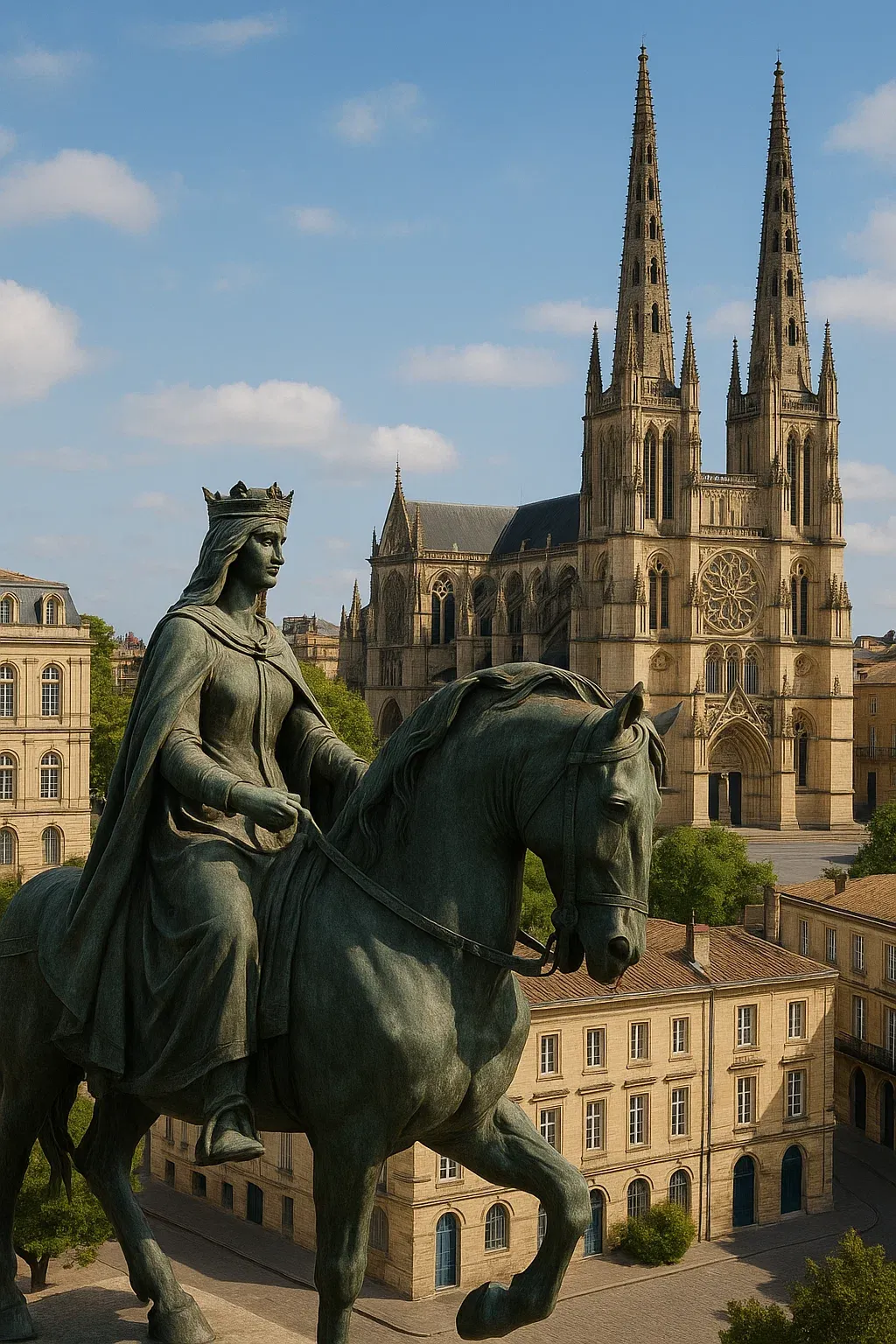
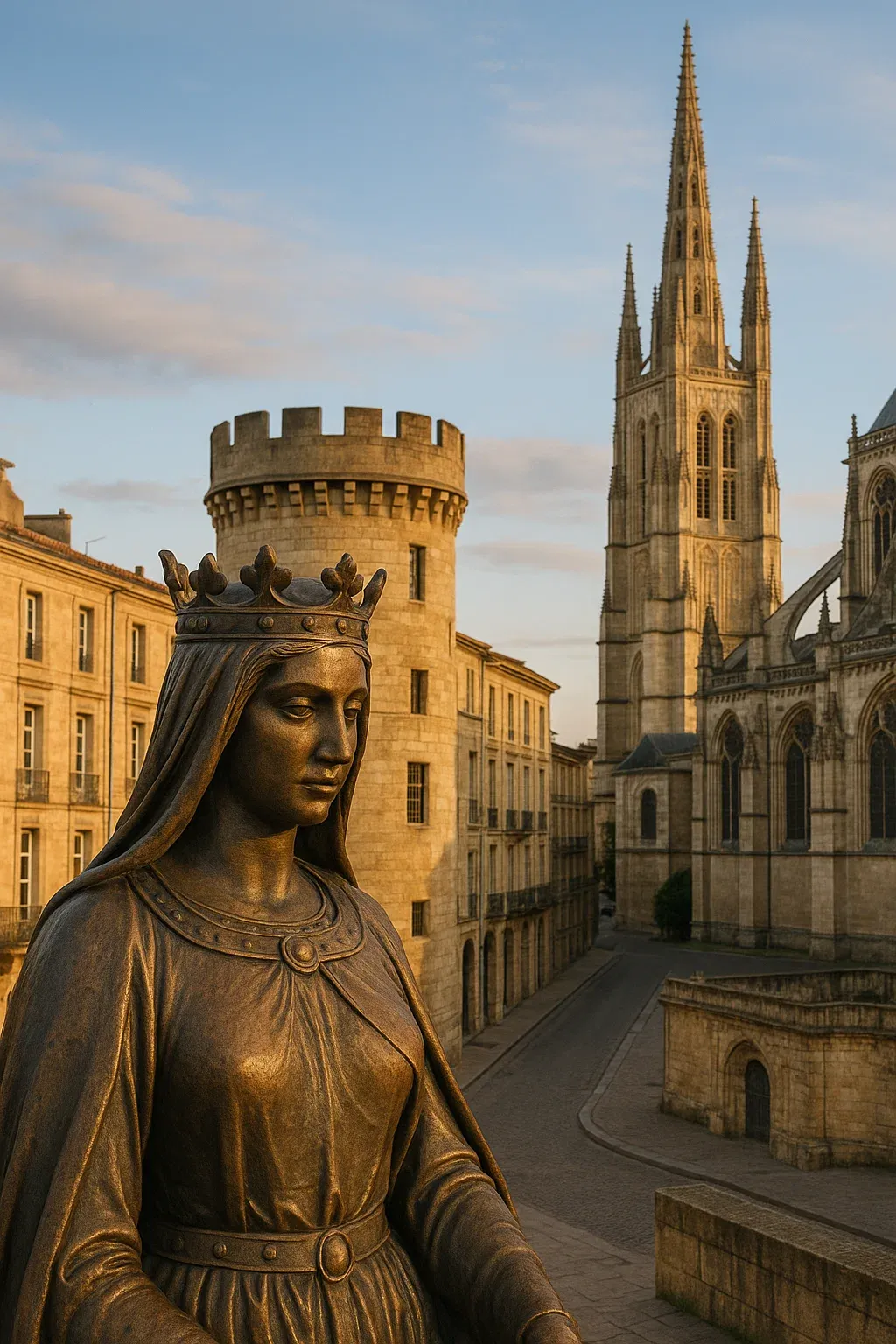
Eleanor of Aquitaine’s life was extraordinary in scope and impact. She was not only a participant in the major political events of her time, but a driving force in shaping them. As Duchess of Aquitaine, she brought one of Europe’s wealthiest and most independent regions into the political orbit of both France and England. As Queen of France and later Queen of England, she stood at the centre of dynastic and diplomatic networks. As the mother of kings and grandmother to some of the most powerful monarchs of medieval Europe, she influenced royal succession, policy, and alliances.
Her connection to Bordeaux remains vital in understanding her legacy. Bordeaux's medieval history was shaped in no small part by her court, her political decisions, and her cultural patronage. She ensured that Bordeaux remained not just a commercial capital but a royal seat, a place of learning, and a city deeply engaged in the politics of Europe. From the Palais de l’Ombrière to Saint-André Cathedral, Eleanor of Aquitaine's sites in Bordeaux are enduring reminders of her influence.
Through Eleanor, Bordeaux and the Dukes of Aquitaine maintained autonomy and prestige for generations. Even under English rule during the Hundred Years’ War, the city prospered because of the structures and traditions she helped establish. Her ability to wield power across two major kingdoms while maintaining her regional authority is unmatched in the annals of royal women in history.
Eleanor’s influence in Europe also changed how women were perceived in noble and royal spheres. She demonstrated that queens and duchesses could act as regents, diplomats, cultural patrons, and political operators. Eleanor of Aquitaine culture—expressed through courtly love, religious patronage, and literature—remains a key element in the cultural identity of Aquitaine today.
In Bordeaux, her legacy continues to be explored and celebrated. Visitors today can trace her steps through Eleanor of Aquitaine walking tour experiences that take in key locations from her life and reign. These include her cathedral, ducal palace sites, and the medieval quarters of the city. The connection between Bordeaux's historical figures and Eleanor is deeply ingrained in the city’s storytelling and historical scholarship.
For those captivated by women of medieval France, Eleanor of Aquitaine France remains the ultimate case study of intelligence, strategy, and resilience. Her legacy—marked by triumph, tragedy, and transformation—continues to shape the historical consciousness of Bordeaux and the broader Aquitaine heritage.
To explore Eleanor’s Bordeaux and immerse yourself in her story, consider joining a tour with Bordeaux Free Walking Tours, where the past becomes present through the streets she once knew.