Place de la Bourse, Bordeaux: History, Architecture & Why It Matters Today
Few places in France capture the spirit and identity of a city as powerfully as Place de la Bourse. Standing on the Garonne riverfront, its symmetrical limestone façades, precise geometry and elegant curves reflect both Bordeaux’s golden age and its modern renaissance. Today, it is one of the most photographed squares in the country and a defining symbol of the region’s heritage.
For travellers, Place de la Bourse is more than a scenic backdrop. It represents the story of Bordeaux — a story of trade, architectural ambition, prosperity and transformation. This long-form guide explores the square’s origins, design, evolution and cultural weight, offering a deeper understanding of why this site remains at the centre of Bordeaux’s collective identity.
A Landmark Born From Ambition: Why Place de la Bourse Was Built
In the early 18th century, Bordeaux was thriving. The port was one of the busiest in Europe, trade routes connected the city to the Caribbean and North America, and the wine market was rapidly expanding. With prosperity came ambition: Bordeaux wanted a square that expressed its importance on the international stage.
Until this time, much of the city still followed medieval patterns — narrow streets, irregular plots, modest façades. The municipal authorities envisioned something entirely new: a grand, open, harmonious space that would reflect the ideals of the Enlightenment and project the city’s status through architecture.
The result was Place Royale, now known as Place de la Bourse, conceived as the city’s architectural masterpiece.
The Vision of Ange-Jacques Gabriel: Building Harmony and Power in Stone
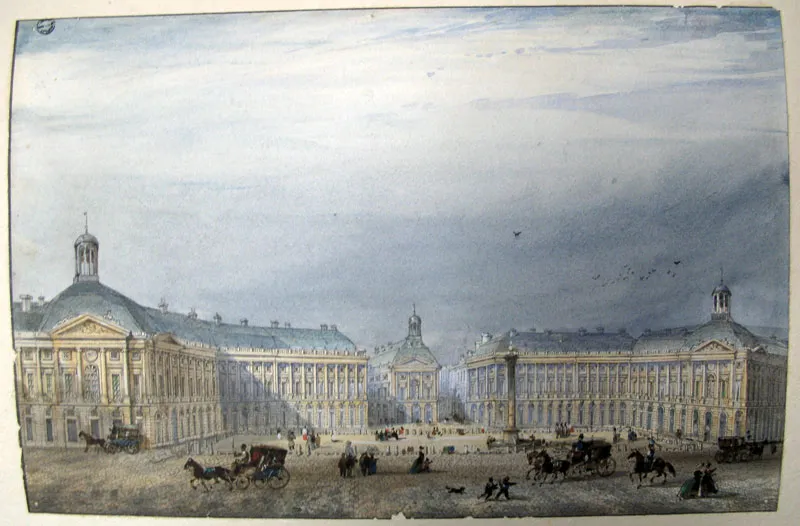
The man responsible for this transformation was Ange-Jacques Gabriel, the chief architect of King Louis XV and one of the most influential designers of the 18th century. Gabriel was known for his ability to combine elegance with clarity, creating spaces that appear balanced, timeless and gracefully restrained.
His goals for Place de la Bourse were ambitious:
- To open Bordeaux to the river
- To create symmetry on a monumental scale
- To design façades that reflected Enlightenment ideals
- To craft a space that announced Bordeaux’s wealth and power
Gabriel’s choice of pale limestone, sculpted pediments and rhythmic columns gives the square its iconic, unified appearance.
Why the Location Matters: Opening Bordeaux to the Garonne
Before the square was built, Bordeaux’s relationship with the Garonne was functional rather than aesthetic. Trade happened on the quays, ships docked for goods, and the riverfront was busy but not beautiful.
Place de la Bourse changed that. Gabriel placed the square along the river to create a powerful visual connection: the architectural order of the city meeting the flowing movement of the Garonne.
This placement did three things:
- It anchored the city visually to the river, highlighting the source of its prosperity.
- It created a grand entrance for travellers arriving by boat, who saw the square as a monumental welcome.
- It reoriented Bordeaux’s urban identity toward the water, shaping the city’s future development.
This relationship between stone and water remains one of the square’s defining features.
Understanding the Architecture: Harmony, Geometry and Symbolism
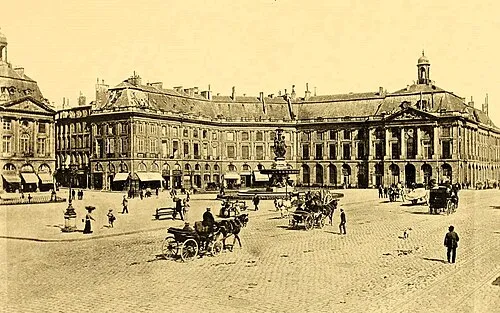
Place de la Bourse is often described as one of the purest examples of classical French urban architecture. At first glance, its elegance feels effortless — but every detail serves a purpose.
Symmetry
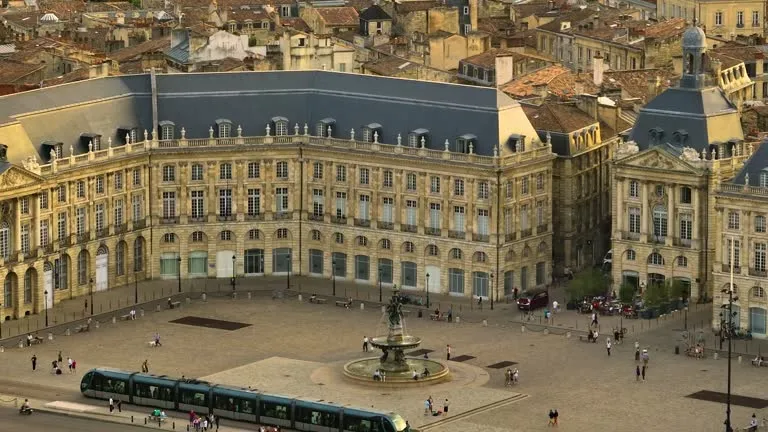
The square’s most striking feature is its perfect symmetry. Two nearly identical buildings frame the open space in a gentle curve. This symmetry reinforces the sense of balance and proportion.
Façades
The façades are composed of arcades, large windows, sculpted pediments and decorative cartouches. They appear unified thanks to the consistent limestone and uniform style.
Rooflines
The mansard roofs, with their slate tiles and rhythmic dormer windows, add vertical elegance while anchoring the façades’ horizontality.
Carvings and Emblems
Sculptures referencing commerce, river trade and the monarchy reflect the city’s economic and political alliances at the time.
The Central Statue (Originally)
Place Royale originally featured an equestrian statue of Louis XV. The statue was destroyed during the French Revolution, symbolising the shift in political power.
The Miroir d’Eau: A Modern Icon Complimenting a Historic Masterpiece
Directly opposite Place de la Bourse lies the Miroir d’Eau, the world’s largest reflecting pool, created in the early 2000s as part of Bordeaux’s urban transformation. Its shallow sheet of water mirrors the square’s façades, producing photographs that have become internationally recognised.
Map:
Miroir d’Eau
The Miroir d’Eau’s design is deceptively simple — a thin film of water that alternates between mirror-like stillness and a rising mist. Yet this simplicity magnifies the beauty of the square, creating one of the most atmospheric public spaces in France.
If you're curious about how this iconic installation works, explore our detailed guide to the science behind Bordeaux’s Water Mirror, which explains the engineering and design that make it so visually striking.
Why the Miroir d’Eau works so well:
- It extends the openness of the square
- It visually doubles the architecture
- It adds movement and modernity
- It invites people to interact with the space
Together, the square and its mirror form a striking dialogue between heritage and innovation.
How Place de la Bourse Shapes Life in Bordeaux Today
While the square was originally designed to project power, today it serves a very different purpose. It has become one of the most beloved public spaces in Bordeaux — a place where tourists and locals cross paths daily.
A meeting place
Friends gather here before walking into the old town or along the river.
A photography hotspot
Travellers, photographers and influencers flock to capture the iconic reflection.
A transit corridor
Locals cycle and walk through the square as part of their daily commute.
A place for contemplation
At sunrise and sunset, the light transforms the façades, creating a serene and atmospheric moment.
A stage for the city
Events, festivals and art installations often take place in or around the square.
Because it is open and uncluttered, Place de la Bourse feels both monumental and accessible — a rare combination.
A Square That Represents Bordeaux’s Identity
Place de la Bourse embodies many themes that define the city:
1. Wine Wealth and Trade
The square reflects the era when Bordeaux’s wine merchants and traders built the city’s fortunes.
2. Architectural Harmony
The consistent stone façades found across the city centre are rooted in the style established here.
3. Open Spaces
Bordeaux’s identity is tied to clean, luminous spaces that let the architecture breathe.
4. Connection to the Garonne
The river still shapes the city’s rhythm, and the square highlights that relationship.
5. Renaissance and Renewal
The cleaning of façades and restoration of the quays in the early 2000s reintroduced the square to the world.
6. Living Heritage
Place de la Bourse is not a static monument; it remains part of daily life.
For travellers, this square often becomes the emotional anchor of their visit — the point where Bordeaux’s centuries of history come into focus.
Architectural Details You Might Miss (But Should Notice)
Even frequent visitors walk through Place de la Bourse without realising the subtle features that make it extraordinary.
The Pediments
Each building has sculpted pediments featuring symbols of commerce, agriculture and royal imagery.
The Curved Space
The square is not a rectangle — it curves outward toward the river, inviting movement and framing views.
The Balconies
The iron balconies display intricate craftsmanship that rewards close observation.
The Arched Doors
These entrances give the façades rhythm and echo the arcades found across Bordeaux.
The Way Light Moves Across the Stone
Bordeaux limestone changes colour depending on the time of day, from warm honey tones to pale gold.
These small details reveal the square’s exceptional craftsmanship.
Place de la Bourse and the 21st Century: A Reimagined Landmark
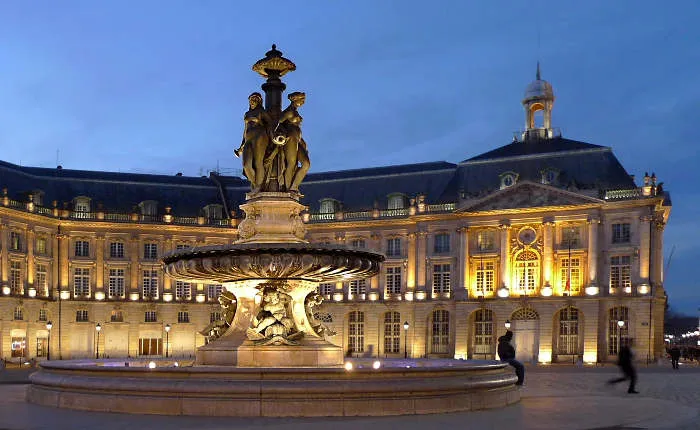
Bordeaux’s transformation in the early 2000s brought new life to Place de la Bourse. The façades were cleaned, traffic decreased, pedestrian areas expanded, and the Miroir d’Eau was added, reshaping how people experience the space.
This modern revival transformed the square into:
- A major international tourist attraction
- A symbol of Bordeaux’s renaissance
- A central element of the city’s visual identity
- A popular location for film shoots and photography
- A place where modern residents feel connected to their heritage
The square, once a symbol of royal power, is now a symbol of the city’s renewal.
Understanding Place de la Bourse Through a Walking Tour
Seeing Place de la Bourse is one thing — understanding its story is another. Guided experiences such as Bordeaux Free Walking Tours help travellers explore:
- Why the square was built
- How its architecture reflects Enlightenment ideals
- How Bordeaux’s port shaped its identity
- How the city transformed in the 18th century
- The role of wine in the region’s prosperity
Many visitors begin their discovery of the city with a free walking tour of Bordeaux to gain the historical and cultural context that brings the square to life.
Final Reflections: A Symbol of Bordeaux’s Past and Future
Place de la Bourse is more than a beautiful square. It is the architectural heart of Bordeaux, the most recognisable image of the city, and the perfect introduction to its past. Its harmonious façades speak to the ambitions of the 18th century, while its modern mirror reflects a city reborn in the 21st.
Whether you see it at sunrise, at sunset, or lit softly at night, the square always reveals something new. It captures the grandeur of Bordeaux without arrogance, blending history, craftsmanship and beauty in a way that feels effortlessly timeless.
For many travellers, Place de la Bourse becomes the moment they fall in love with Bordeaux — a moment when the city’s identity becomes clear, luminous and unforgettable.