Bordeaux’s Doors, Windows & Iron Balconies: Hidden Stories in Architecture
It is easy to fall in love with Bordeaux at first glance — the calm elegance of its limestone façades, the soft golden light at sunset, the harmonious repetition of windows and balconies stretching along entire streets. But the beauty of the city does not lie only in its overall architecture. It lives in details: the shape of a door handle worn smooth over generations, the curve of a wrought-iron balcony, the carved stone above a window, the way a shutter casts patterned shadows on a façade.
Travellers who slow down and observe Bordeaux’s buildings discover a world of stories written in stone, metal and wood. Every balcony has a lineage, every door a personality, every window a purpose shaped by centuries of craftsmanship. These details reveal how the city expanded, how its residents lived, how styles shifted, and how artisans adapted their techniques to Bordeaux’s limestone and its gentle Atlantic light.
This guide takes you through the architectural details that define Bordeaux — focusing on doors, windows, and iron balconies — explaining where they come from, what they represent, and how to spot the subtle differences that reveal the city’s past.
The Foundations: Why Bordeaux Looks the Way It Does
Bordeaux’s architectural identity developed through a combination of history and geography.
1. Limestone Abundance
The region around Bordeaux contains rich limestone quarries. Builders used this stone extensively because it was easy to carve when fresh, then hardened with age.
The unique qualities of this limestone also explain why the city appears to shimmer at dusk — something we explore in more detail in our guide to why Bordeaux buildings glow golden at sunset.
2. 18th-Century Urban Planning
Much of central Bordeaux was rebuilt during the 1700s, producing the uniform façades that give the city its harmony.
3. Merchant Wealth
As a major port city, Bordeaux prospered from trade. Wealthy merchants financed beautiful townhouses with ornate details.
4. Artisans & Guilds
Stone carvers, ironworkers, joiners and glass-makers contributed distinctive craftsmanship.
Together, these forces shaped the doors, windows and balconies we admire today.
The Doors of Bordeaux: Thresholds with Personalities
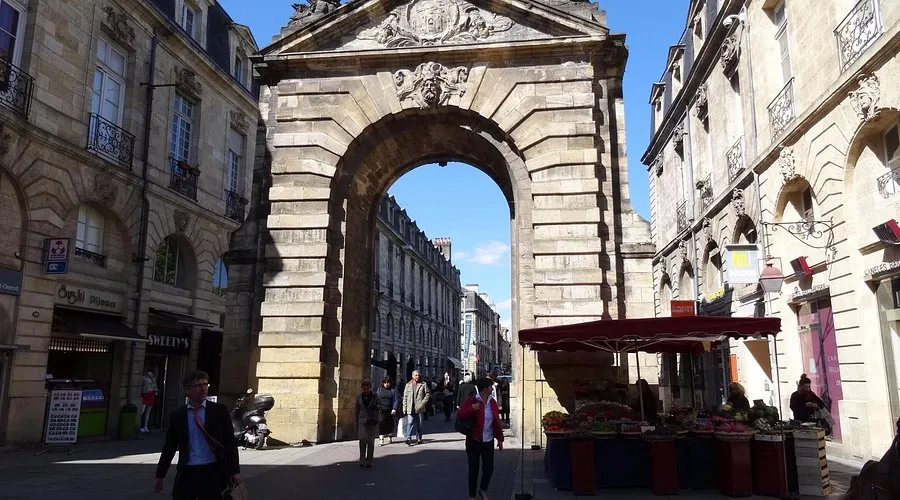
Doors in Bordeaux are among the most expressive elements of the city’s architecture. Their shapes, carvings, knockers and frames reveal clues about the age and status of the house.
1. The Grand 18th-Century Doors
These large wooden doors, often painted deep green, grey, or blue, belong to the golden age of Bordeaux’s merchant houses.
Characteristics
- tall and wide, allowing carriages to enter courtyards
- heavy wood panels carved with symmetrical motifs
- sculpted stone frames
- discreet but elegant iron elements
- fanlights (semi-circular windows) above the door
Symbolism
These doors represent wealth and openness — thresholds to large internal courtyards where trade, business and storage once took place.
2. Blue and Green Doors: Bordeaux’s Signature Colours
Walk through the Saint-Pierre, Chartrons, or Saint-Michel neighbourhoods, and you’ll notice many doors painted in rich blues or deep greens.
Why These Colours?
- They reflect maritime influence.
- They complement the golden limestone.
- They echo historical pigments available in the region.
These colours absorb light beautifully, especially at sunset when the façades glow warm gold.
3. Door Knockers: Small Objects with Big Meaning
Door knockers in Bordeaux range from simple iron rings to elaborate brass sculptures.
Common Motifs
- lion heads (symbol of strength)
- hands (a Mediterranean motif representing welcome)
- floral shapes (common during the 19th century)
Each knocker tells a story about taste, status, or symbolism chosen by the residents.
The Windows of Bordeaux: Eyes of the City
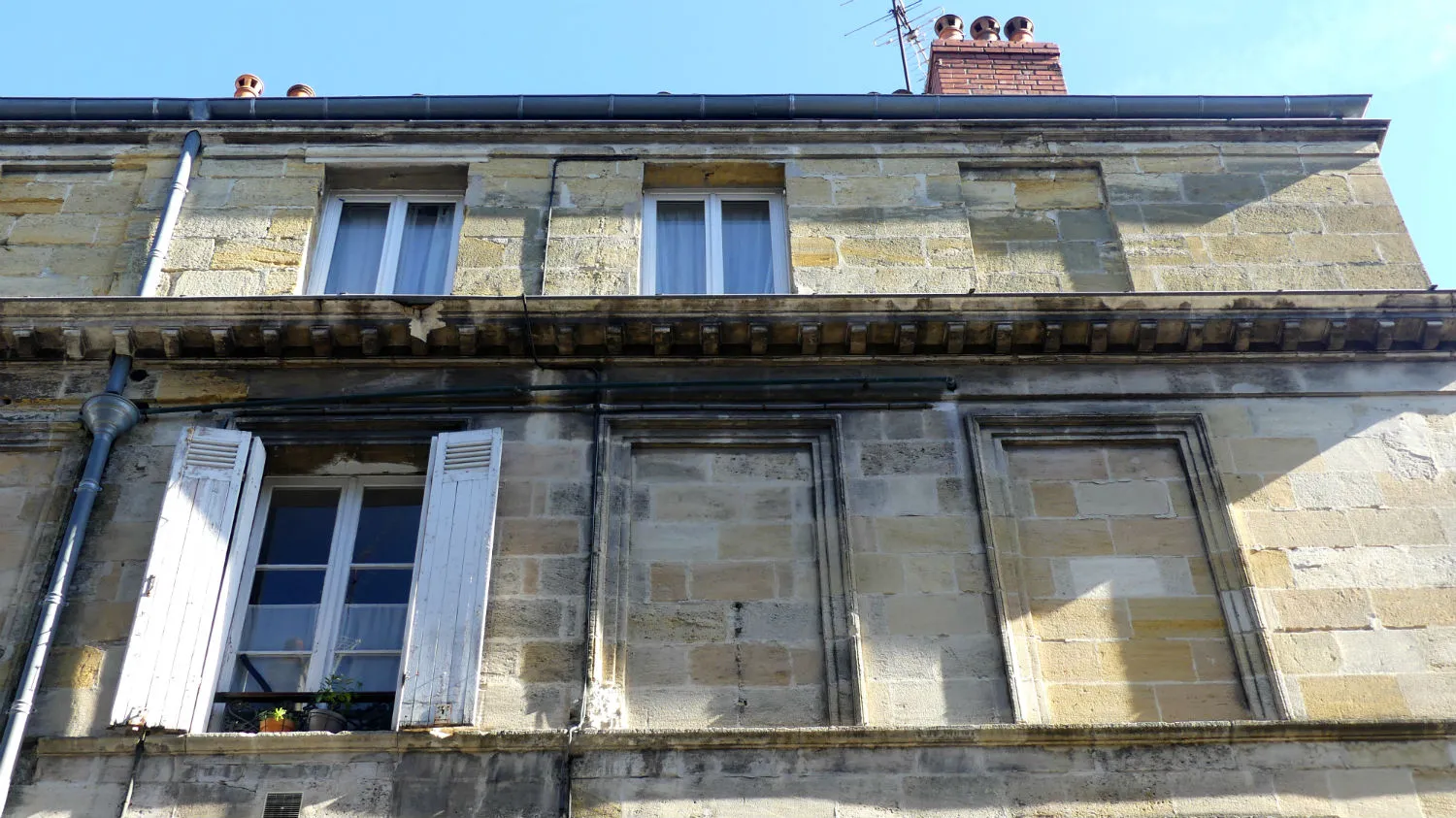
Windows define the rhythm of Bordeaux’s streets. Their symmetry, height and frames reflect the social expectations of the time they were built.
1. Tall, Narrow 18th-Century Windows
These windows align perfectly from building to building because they were designed during a period of strict urban planning.
Features
- elegant stone frames
- tall proportions for maximum light
- metal railings or small balconies
- shutters painted shades of blue, white or grey
Why So Tall?
Tall windows allowed the maximum amount of natural light into rooms with high ceilings, a sign of prestige.
2. French Windows & Indoor-Outdoor Living
Many Bordeaux apartments have windows that open like doors — classic French windows.
They open directly onto:
- small balconies
- Juliet railings
- larger iron terraces
This design blurred the line between interior and exterior, allowing air and light to circulate through the maison de ville.
3. Stone Lintels & Sculpted Motifs
Above many windows, you’ll find carved stone details:
- shells
- ribbons
- floral garlands
- geometric patterns
These decorations belong mostly to the 18th century, when ornamentation reflected wealth and taste.
Iron Balconies: The Jewellery of Bordeaux’s Façades
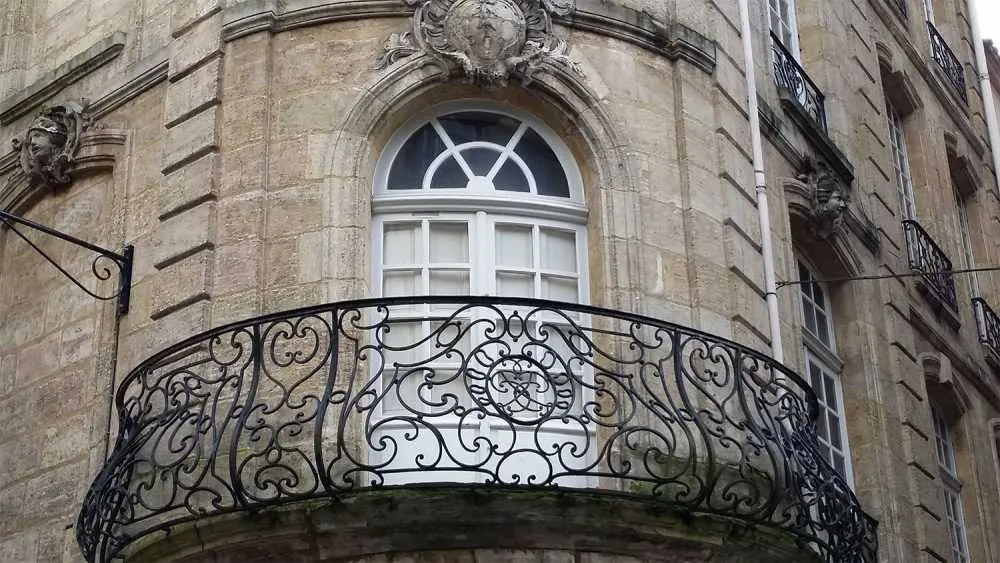
The iron balconies of Bordeaux are masterpieces of craftsmanship. Their curves, scrolls, and latticework patterns add grace to the limestone façades.
1. Wrought Iron Black Balconies: The Bordeaux Classic
These black iron balconies are the most recognisable feature of the city’s architecture.
What Makes Them Unique
- elegant symmetrical designs
- repetition across long façades
- handmade ironwork with subtle variations
- curves inspired by the Rococo style
These balconies are found throughout the historic centre, especially along Cours Victor Hugo, Quinconces, and the Golden Triangle.
2. The Rocaille Style
In the 18th century, baroque influence inspired swirling patterns resembling:
- shells
- waves
- vines
These motifs reflected the prosperity of Bordeaux’s merchant class.
3. Balconies and Social Life
Balconies were not purely decorative. They allowed:
- fresh air into homes
- residents to observe street life
- plants and flowers to be displayed
- cooling ventilation during warm summers
In a port city like Bordeaux, balconies became the meeting point between home and street.
Architectural Neighbourhood Walk: Where to See the Best Details
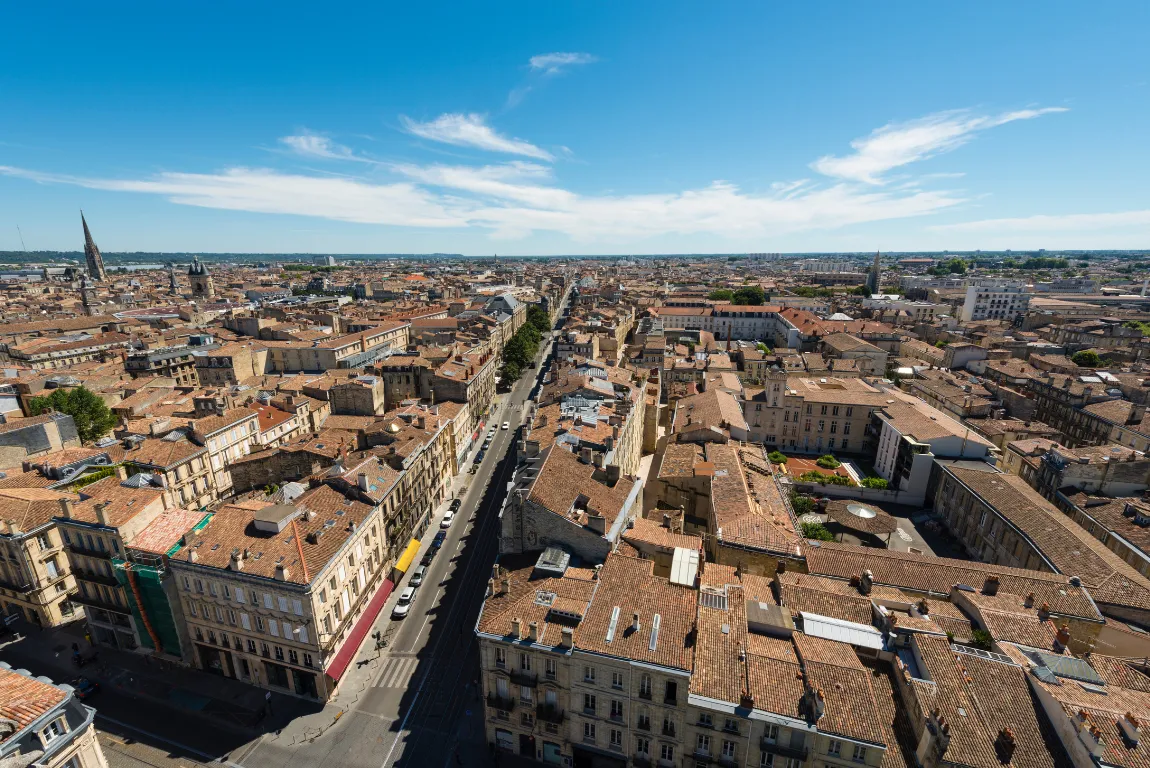
Walk the city slowly, looking upward — this is where its beauty lives. Below are the most rewarding areas for travellers wanting to explore architectural details.
1. Place de la Bourse & Surrounding Streets
This area offers the most harmonious example of the city’s 18th-century planning.
The façades are symmetrical, the windows perfectly aligned, and the balconies refined.
2. Quartier des Chartrons
Chartrons reveals a different personality — more artistic and slightly bohemian.
Here, front doors often have bright colours, balconies are more expressive, and stonework varies from house to house.
3. Saint-Pierre
Narrow lanes hide some of Bordeaux’s oldest doors and shutters. This neighbourhood blends medieval and 18th-century details.
4. Triangle d’Or (Golden Triangle)
Elegant boulevards, grand balconies, carefully restored façades — this area shows Bordeaux at its most refined.
The Craftsmanship Behind the Details
Behind every balcony, window, and door lies the work of skilled artisans — blacksmiths, stone carvers, joiners, and glassmakers.
1. Ironworkers (Ferronniers)
These artisans shaped heated metal into:
- scrolls
- flowers
- curves
- geometric borders
Their techniques were passed down through generations, and traces of human craftsmanship remain visible in the small imperfections of each balcony.
2. Stone Carvers
Working with Bordeaux’s soft limestone, carvers created:
- window frames
- cornices
- capitals
- decorative reliefs
The stone becomes harder over time, giving façades durability and charm.
3. Woodworkers & Joiners
Doors and shutters were crafted from:
- oak
- chestnut
- pine
Their joinery techniques ensured stability despite Bordeaux’s humid climate.
4. Glassmakers
Glass for windows and fanlights reflects the evolution of the industry. Early pieces show slight warping or small bubbles, while later windows appear clearer and more uniform.
Restoration & Preservation: How Bordeaux Protects Its Architecture
Bordeaux’s historic centre is a UNESCO World Heritage site, which imposes strict rules for preservation.
Restoration focuses on:
- cleaning limestone façades without damaging them
- preserving original ironwork
- repairing shutters rather than replacing them
- using authentic pigments for door colours
- respecting original proportions during renovations
The city invests in maintaining its architectural harmony, ensuring future generations can admire it.
Why These Details Matter to Travellers
Many visitors admire Bordeaux’s architecture without realising how much craftsmanship lies behind it. But when you look closely, doors, windows and balconies become stories etched into stone and metal.
They reflect:
- trade wealth
- artistic evolution
- changing lifestyles
- cultural identity
- artisan knowledge
- the way light moves through the city
Understanding these details makes each walk feel richer and more meaningful.
To explore the architecture with local insight, many travellers begin with a walking tour — a welcoming option is Bordeaux Free Walking Tours:
https://bordeauxfreewalkingtours.com/
A Final Reflection on Bordeaux’s Architectural Poetry
Bordeaux’s charm lies not only in its sweeping avenues or majestic squares but in the quiet details that decorate its façades. A carved motif above a window, a wrought-iron swirl on a balcony, a faded door knocker polished by time — each contributes to the city’s identity. These elements speak of artisans who shaped the city with their hands, of families who lived behind those doors, of generations who looked through those windows and over those balconies onto the city below.
When you notice these details, Bordeaux stops being a postcard and becomes a living place — textured, intimate, full of small stories waiting to be discovered.
Walking its streets slowly, especially with the insight of guides from Bordeaux Free Walking Tours, brings these architectural whispers to life:
https://bordeauxfreewalkingtours.com/
In Bordeaux, beauty is in the details — and once you see them, you cannot stop noticing them everywhere.