Why Bordeaux’s Buildings Glow Golden at Sunset: The Limestone Story
There is a moment in Bordeaux — brief, elusive, unforgettable — when the entire city seems to exhale light. Travellers often notice it first from the quays: the façades warming into soft amber, the stone turning honey-coloured, balconies casting long shadows like brushstrokes. This golden glow is so characteristic of Bordeaux that many people assume it’s intentional, perhaps a trick of lighting or a clever architectural design.
But the truth is far more interesting. The glow comes from stone, time, minerals, and the way light interacts with thousands of buildings built from the same geological heart. Bordeaux’s luminous identity is rooted in the soft, pale, fossil-rich stone that defines the city’s architecture. This is the story of that stone — why it looks the way it does, how it behaves, and why sunset transforms Bordeaux into one of Europe’s most beautiful golden cities.
The Stone That Built the City
Bordeaux’s glow begins with limestone — not just any limestone, but a distinctive variety quarried from the Gironde region. For centuries, local quarries supplied the stone that built the city’s townhouses, civic buildings, churches, quays, and even its pavements.
This limestone is:
- pale and porous, absorbing light rather than reflecting it harshly
- rich in marine fossils, giving it texture and internal variation
- soft when cut, hardening over time as it dries
- naturally honey-toned, with mineral properties that warm under sunlight
Nearly every historic building in central Bordeaux is made from this stone. The city’s architectural harmony — that sense of unity and elegance — comes not only from urban planning but from shared material identity.
The stone belongs to the same family of limestone that stretches across the Aquitaine Basin, shaped by ancient seas, layers of sediment and fossil deposits. Its pale colour gives Bordeaux its brightness; its texture gives the city depth.
Why Limestone Glows: The Science of Light & Stone
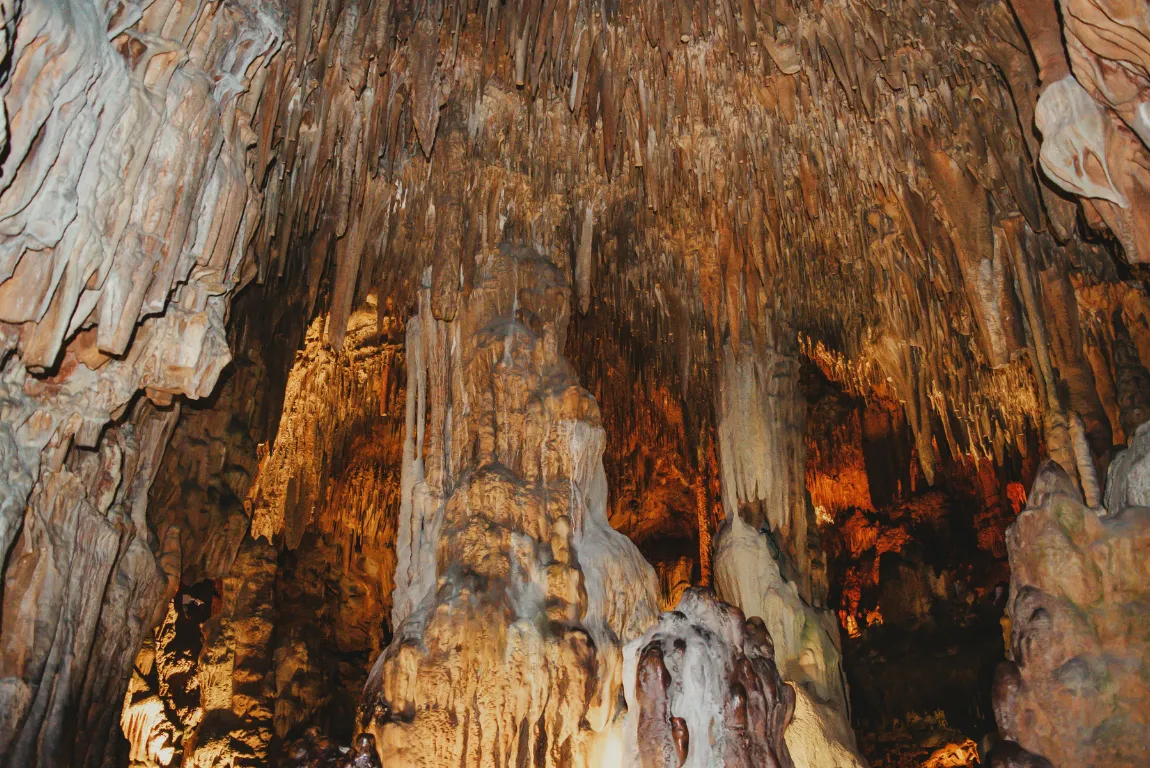
Limestone’s warmth at sunset is not a photographic trick — it’s a physical effect based on how the stone interacts with low-angle sunlight.
1. Porosity Enhances Light Absorption
Bordeaux’s limestone is naturally porous. In the late afternoon, sunlight enters the pores and is partially absorbed, producing a warm, internal glow rather than a flat reflection. This creates a diffused, golden radiance across façades.
2. Fossils Scatter Light
Shell fragments and marine particles embedded in the stone scatter sunlight in multiple directions. This makes the surfaces shimmer gently when illuminated from the side.
3. Mineral Content Changes Colour
Iron traces within the stone deepen the warm tones during “golden hour”.
When sunlight hits the façades at a low angle, the iron compounds reflect amber and honey shades rather than white light.
4. Low-Angle Sunlight Lengthens Shadows
Bordeaux’s balconies, shutters and cornices create textured shadows that exaggerate architectural details. The combination of depth and warmth creates the impression of glowing walls.
5. Limestone Ages Gracefully
Over time, the stone darkens slightly but retains its ability to warm under sunlight. Older façades often show richer tones, especially in historic districts like Saint-Pierre, Chartrons, and around Place de la Bourse:
https://maps.google.com/?q=Place+de+la+Bourse+Bordeaux
The glow is therefore not an illusion — it’s a natural response to the light of the Atlantic.
Sunset in Bordeaux: Where the Glow Appears First
Not all parts of the city catch the light at the same time. Because Bordeaux faces west across the Garonne, the best glow appears on façades along the river and in open squares.
Here are the key zones where the limestone shines most intensely.
1. Place de la Bourse
Google Maps:
https://maps.google.com/?q=Place+de+la+Bourse+Bordeaux
This is the quintessential golden façade. At sunset, the classical columns, carved pilasters and symmetrical windows deepen in colour, shifting from pale beige to glowing amber. The curves of the building trap warm light, making the entire square look almost theatrical.
Even without the Water Mirror, the glow is breathtaking.
2. Quai des Chartrons
Google Maps:
https://maps.google.com/?q=Quai+des+Chartrons+Bordeaux
The long riverside façades absorb late sunlight across their length. The glow stretches for hundreds of metres, producing a continuous golden line along the quays.
Cyclists, walkers and photographers gather here specifically for this moment.
3. Esplanade des Quinconces
Google Maps:
https://maps.google.com/?q=Esplanade+des+Quinconces+Bordeaux
The open space allows sunlight to hit surrounding buildings at a dramatic angle. As the sun lowers, shadows from the Monument aux Girondins stretch across the square while the façades behind it warm into rich gold.
4. Grand Théâtre & Place de la Comédie
Google Maps:
https://maps.google.com/?q=Grand+Théâtre+Bordeaux
The stone columns of the Grand Théâtre catch the last light of the day, glowing with classical splendour. The limestone here is particularly fine, giving the building an almost opalescent quality at sunset.
5. St-Pierre District
The narrow lanes of Saint-Pierre create pockets of intense light that fall directly onto carved stone windows and doorways. Because the streets are angled irregularly, the glow appears unexpectedly — turning a quiet corner into a luminous scene.
The Geological Story Behind Bordeaux’s Limestone
The limestone that built Bordeaux began forming over 40 million years ago when much of the region lay under a warm, shallow sea. As marine creatures lived and died, their shells and skeletons settled on the sea floor. Over millions of years, these layers compressed into the creamy, fossil-rich stone we see today.
Key Characteristics:
- Fossil Composition: striated with tiny shell fragments
- Texture Variability: Some blocks are smooth; others have grain
- Durability: hardens through exposure
- Warm Colouration: soft beige with hints of honey and cream
When cut, the stone appears pale and chalky. When aged, it matures into deeper tones. When lit by sunset, it glows.
Why Bordeaux’s Glow Is Different from Paris, Lyon or Toulouse
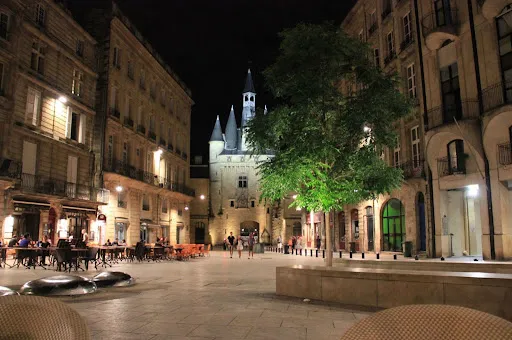
Many French cities glow in the evening, but Bordeaux’s radiance is distinctive.
1. Parisian Stone Is Cooler
Paris uses Lutetian limestone, greyer and denser. Its sunset tones are gentler and more neutral.
2. Lyon Mixes Stone Types
Granite, limestone and sandstone create less uniformity in colour.
3. Toulouse Glows Pink
The famous “Ville Rose” shines with terracotta and brick, not pale limestone.
Bordeaux alone glows golden because of:
- Its uniform use of local luminous limestone
- It's riverside western orientation
- It's balanced architectural lines
- Its maritime light was softened by humidity
This combination creates a golden palette seen almost nowhere else in France.
The Light Itself: Atlantic Sunsets & Garonne Reflection
Stone is only half the story. The other half is light.
1. Maritime Light
Bordeaux sits close to the Atlantic, whose atmosphere scatters light differently. The air contains more moisture and salt, which softens sunlight and increases warm tones near sundown.
2. River Reflection
The Garonne acts like a giant mirror.
Its broad, slow-moving surface bounces sunlight back onto façades, doubling the effect.
3. The Western Curve
Bordeaux’s river bends westward, creating angles that catch the sun directly.
This is rare for European river cities, which often face north-south.
4. Seasonal Light Variations
- Summer: peach and honey tones
- Autumn: deep gold
- Winter: soft silver-gold
- Spring: bright pale yellow
Each season offers a slightly different version of the glow.
Balconies, Shutters & Shadows: How Architecture Enhances the Glow
Architecture in Bordeaux is designed in a way that makes the city especially reactive to light.
1. Iron Balconies Cast Delicate Shadows
The black wrought-iron balconies create lace-like shadows that stretch across limestone.
2. Tall Windows Catch Light Deep Into Interiors
The long, narrow windows of the 18th century allow sunlight to penetrate deeply, creating interior glows that spill back onto streets.
3. Carved Cornices Hold Light Beautifully
Stone carvings trap light in their details — a sculptural effect that enhances the shadows at sunset.
4. Uniform Height Means Light Falls Evenly
Because most historic buildings share similar height, light washes across them in one unbroken sweep.
Taken together, Bordeaux’s architecture behaves almost like a stage set for golden hour.
Where Travellers Most Feel the Limestone Glow
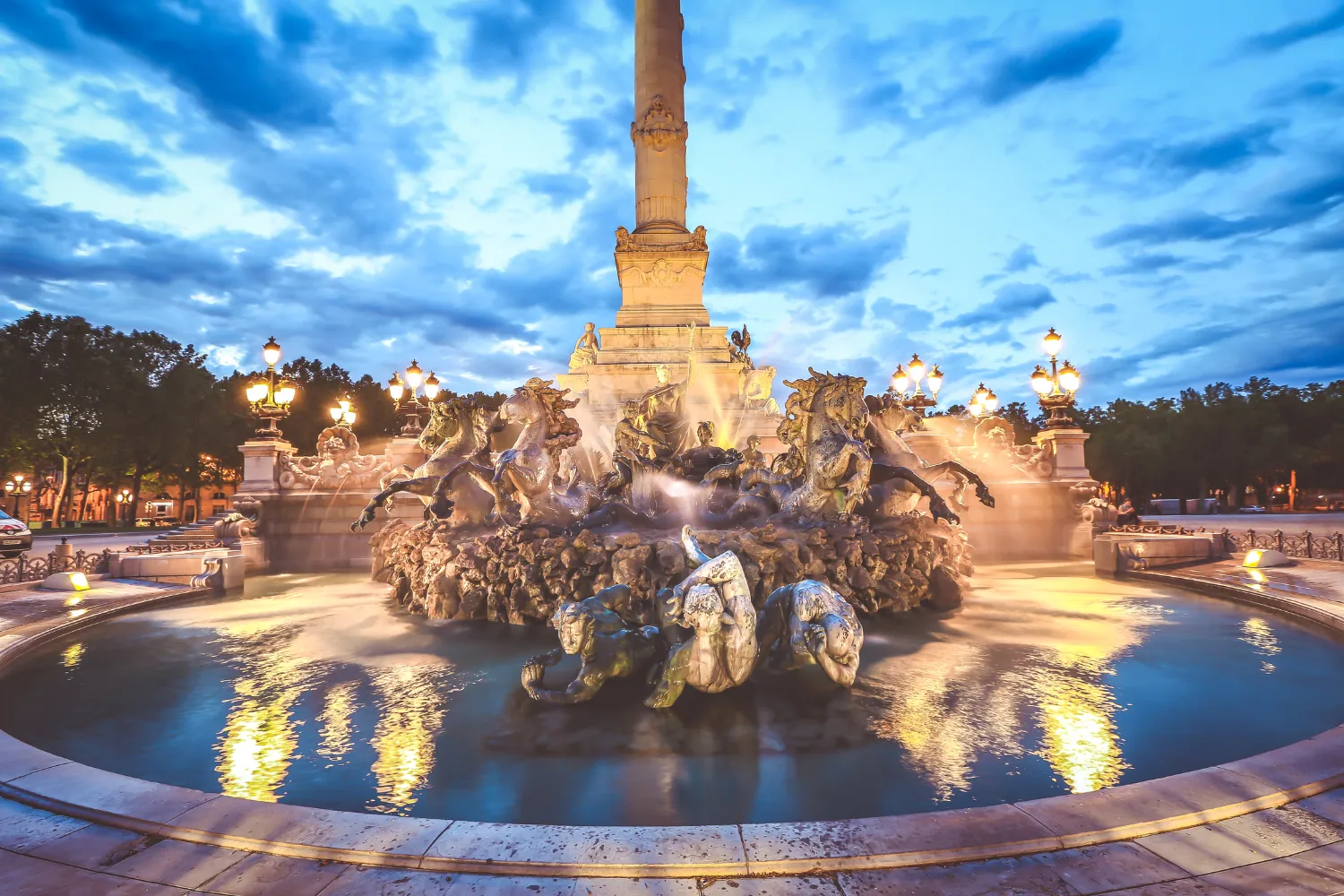
Travellers often describe the glow as a moment when the city feels suspended — the façades warming, the streets calming, the river smoothing out.
If you’re planning to time your walk perfectly, our guide to the best sunset spots in Bordeaux highlights the exact riverbanks, squares and viewpoints where the limestone glow feels most intense.
Ecstatic first-time reactions tend to happen in:
- the curve around Place de la Bourse
- the long walk along Quai des Chartrons
- the elegant streets of the Golden Triangle
- the steps of Grand Théâtre
- the open spaces around Quinconces
- hidden lanes in Saint-Pierre
Sunset walking tours often highlight these areas, and a warm way to explore them is with the local insights offered by Bordeaux Free Walking Tours:
https://bordeauxfreewalkingtours.com/
How the City Preserves Its Glow
Bordeaux’s luminous façades didn’t always look this clean.
Before the 1990s, many buildings were darkened by pollution.
A major restoration project transformed the city, returning it to its golden identity.
Preservation Efforts Include:
- gentle cleaning methods
- limestone-friendly restoration techniques
- careful protection of carved details
- restrictions on altering façades
- colour guidelines for shutters and balconies
The city remains committed to maintaining the harmony and brightness that define its character.
What Sunset Reveals About Bordeaux’s Identity
The glow is more than a visual effect — it reflects Bordeaux’s deeper nature.
1. The City’s Calm Personality
The golden hour fits the city’s rhythm: slow, elegant, thoughtful.
2. A Maritime Influence
The light is softened by the river and the ocean, giving warmth to the stone.
3. Harmony of Design
The uniform architecture responds to light collectively, like one continuous canvas.
4. A Sense of Heritage
The limestone is a physical link to the region’s geological past.
5. Emotional Impact
Sunset connects travellers to the city through feeling, not just sightseeing.
The glow is part of Bordeaux’s soul — a daily transformation that makes the city feel alive.
A Final Reflection on Bordeaux’s Golden Limestone
Bordeaux’s golden glow is a story of stone and light, of geology and architecture, of a river city that discovered its identity through the warm embrace of sunset. The limestone façades absorb the day and release it in colour. Shadows extend, balconies silhouette themselves, and streets gather warmth as the sun dips behind the river.
For travellers, witnessing this moment becomes a memory long after leaving the city. And if you want to understand the façades, the details, the stonework and the stories behind the glow, exploring with Bordeaux Free Walking Tours offers a welcoming way to connect the city’s beauty with its history:
https://bordeauxfreewalkingtours.com/
Bordeaux glows because it was built from earth, shaped by artisans, and illuminated by light that loves it.
At sunset, the city does not simply brighten — it transforms.