The Passerelle Eiffel in Bordeaux: Gustave Eiffel’s First Great Work.
Most travellers arrive in Bordeaux thinking of wine, elegant squares, or the riverside terraces. Few realise that tucked beside the main railway station stands one of the city’s most remarkable pieces of engineering: the Passerelle Eiffel.
This iron bridge, built in the 19th century, was the very first major project of a young Gustave Eiffel. Long before the Eiffel Tower dominated Paris, Bordeaux gave him the chance to prove his vision. The Passerelle Eiffel still stands today as a proud reminder of that beginning.
For those who love history, architecture, or simply exploring parts of Bordeaux that tell a deeper story, the Passerelle Eiffel is worth seeking out.
Passerelle Eiffel Bordeaux History
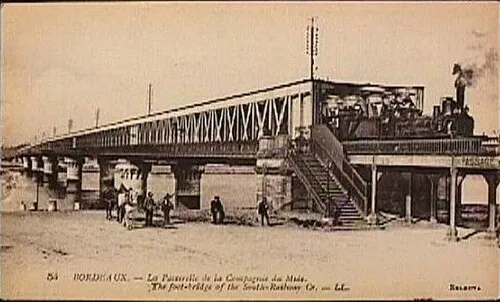
Why It Was Built:
By the mid-1800s, Bordeaux was thriving. The city’s wine was in demand worldwide, its merchants grew wealthy, and railways were transforming travel. But there was a problem: the Garonne River split the railway network in two. Trains arriving at Bordeaux Saint-Jean station could not continue directly across to the other side.
The solution was bold: a new railway bridge that would link Bordeaux with Paris and beyond.
Gustave Eiffel’s Role.
At just 26 years old, Gustave Eiffel was brought into the project. He had studied at the École Centrale in Paris and was known for his talent with iron construction. The Passerelle Eiffel was his chance to prove himself.
Eiffel used new techniques for the foundations, sinking massive supports into the riverbed using compressed-air caissons. This technology was cutting-edge and dangerous, but it allowed the bridge to anchor firmly against the powerful currents of the Garonne.
The Result:
When it opened in 1860, the bridge stretched over 500 metres. Its riveted iron lattice gleamed with industrial ambition. Bordeaux suddenly had one of the most advanced railway bridges in France. More importantly, the Passerelle Eiffel launched the career of the man who would later design one of the most iconic structures in the world.
A Century of Rail and the “Bordeaux Cork”
For nearly 150 years, the Passerelle Eiffel carried trains in and out of Bordeaux. Every train arriving at or leaving Saint-Jean station passed over it. Generations of travellers crossed the Garonne on its iron beams.
But time caught up with it. The bridge had only one track, and by the 20th century, this became a serious bottleneck. Trains slowed to a crawl—sometimes no faster than 30 kilometres an hour. Locals nicknamed it “le bouchon ferroviaire de Bordeaux”—the Bordeaux railway cork.
By the early 2000s, something had to change. In 2008, a new four-track viaduct was opened just north of the old bridge. The Passerelle Eiffel was retired.
From Near Demolition to Heritage Status.
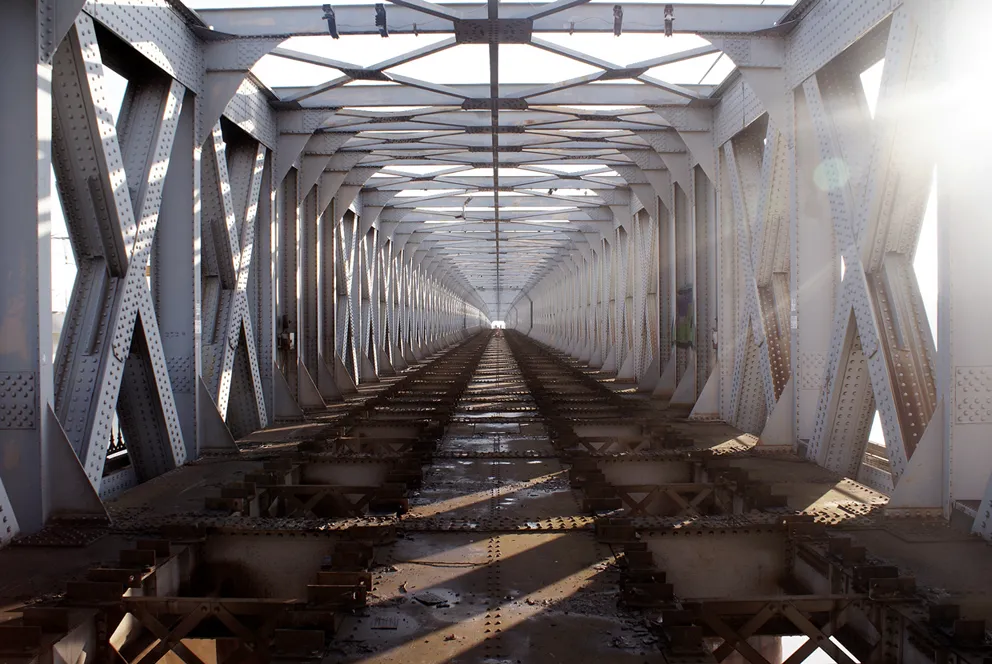
After the new viaduct opened, the Passerelle Eiffel faced an uncertain future. Some argued it should be dismantled. But many in Bordeaux recognised its historical importance—not just as a bridge, but as Eiffel’s first masterpiece.
In 2010, the Passerelle Eiffel was listed as a Monument Historique. Instead of being scrapped, it became a preserved part of Bordeaux’s industrial heritage. Today, it no longer carries trains, but it stands proud beside its modern neighbour, a reminder of how far engineering has come.
Visiting the Passerelle Eiffel
Location.
The bridge stands right next to Gare Saint-Jean, Bordeaux’s main train station. If you’re arriving in Bordeaux by rail, you’ll see it almost immediately.
How to See It
Although the bridge is not open to pedestrians, there are excellent viewpoints. From the quays on either side of the river, you can admire its riveted ironwork. From the neighbouring Pont Saint-Jean, you get a striking side-on view. And from the Bastide district across the water, the bridge frames the skyline beautifully.
Best Time for Photos:
The ironwork looks different throughout the day. In the morning, the soft light highlights its structure. In the evening, as the sun sets behind Bordeaux, the bridge glows gold against the river. For photographers, it’s one of the city’s best industrial landmarks to capture.
Things to Do Near the Passerelle Eiffel.
Because the bridge sits in a busy part of Bordeaux, it makes sense to combine a visit with nearby attractions.
- Stroll the Garonne Quays – The riverside has been transformed into wide promenades with cycle paths and gardens. From here, you’ll see the bridge from different angles.
- Pont de Pierre – Just upstream, this 19th-century stone bridge connects central Bordeaux with the Bastide. It’s another iconic crossing with spectacular views.
- La Bastide District – The right bank of the river offers leafy parks, riverside cafés, and a more relaxed, local vibe. It’s less crowded than the Left Bank.
- Explore Saint-Jean Station – The station itself is worth a look. Its glass canopy and architecture show how Bordeaux modernised in the railway age.
- Join a Walking Tour – With Bordeaux Free Walking Tours, you can hear the full story of the Passerelle Eiffel and how it fits into Bordeaux’s transformation in the 19th century.
Industrial Heritage in Bordeaux:
The Passerelle Eiffel is more than just a bridge. It represents a time when Bordeaux was modernising at high speed. The railway changed how wine was exported, how people travelled, and how the city grew.
Today, the bridge sits quietly by the river, overshadowed by its modern replacement, but that’s exactly what makes it special. It’s a physical link to the past, to the moment when Bordeaux stepped into the age of iron and steam.
For those who love urban history, the Passerelle Eiffel is as important as Bordeaux’s grand squares and medieval gates.
If you enjoy exploring neighbourhoods shaped by trade and river commerce, the nearby Chartrons district of Bordeaux reveals how the wine merchants and docklands helped transform the city during the same industrial era.
Gustave Eiffel’s Legacy in Bordeaux
Eiffel didn’t stay in Bordeaux forever—his career soon took him to bigger projects in Paris and beyond. But the lessons he learned here stayed with him.
- Foundations – His use of compressed-air caissons on the Passerelle Eiffel foreshadowed the techniques he would use for the Eiffel Tower’s foundations.
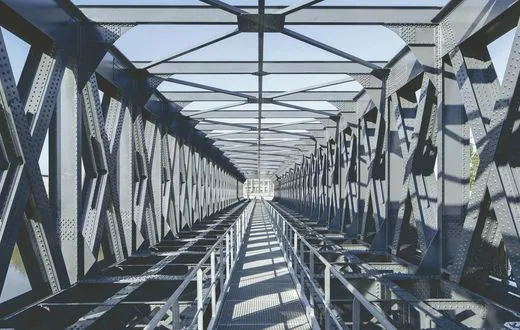
- Iron mastery – The lattice design and riveted joints were early experiments in the engineering language that defined his career.
- Reputation – Completing the bridge successfully gave him credibility. Without Bordeaux, Eiffel might not have gained the projects that later made him famous.
In a way, Bordeaux is where the Eiffel Tower began.
Best Photo Spots of the Eiffel Bridge in Bordeaux
- Pont Saint-Jean – A perfect angle for side-on shots of the Passerelle and the modern viaduct together.
- Left Bank Quays – For close-up details of the riveted iron.
- Right Bank (La Bastide) – Wide views of the bridge and the city skyline, especially at sunset.
- From a river cruise – If you take a boat trip on the Garonne, you’ll pass under the bridge and see its structure from below.
Why You Should Visit the Passerelle Eiffel
Bordeaux is full of grand monuments, but the Passerelle Eiffel offers something different. It’s not polished or decorative—it’s raw, industrial, and honest. Standing near it, you feel the ambition of a young engineer, the roar of old trains, and the power of a river that has always shaped Bordeaux’s destiny.
It may not carry passengers anymore, but it carries stories. And for anyone curious about how Bordeaux became the city it is today, the Passerelle Eiffel is essential.
Final Thoughts
The Passerelle Eiffel is more than an old railway bridge. It’s where Gustave Eiffel proved himself, where Bordeaux stepped into the industrial era, and where engineering changed the future of travel.
Next time you’re near Gare Saint-Jean, take a moment to admire it. Walk the quays, frame it in your camera, and imagine the trains that once thundered across its beams. It may not be as famous as the Eiffel Tower, but in its own way, the Passerelle Eiffel is just as important.