The Eight Bridges of Bordeaux: Linking the Garonne from Past to Present
The bridges of Bordeaux are more than connections between two riverbanks – they are part of the city’s identity, telling stories of commerce, engineering, design, and urban growth. Each of the eight bridges has its own character, whether it’s the classical arches of the Pont de Pierre Bordeaux, the steel height of the Pont d’Aquitaine, or the futuristic lift of the Pont Jacques-Chaban-Delmas.
For visitors, these bridges are not just transport routes. They are scenic walking paths, prime bridge photography spots, and vantage points for viewing both the historic and modern city. Exploring them is one of the most rewarding ways to enjoy a Bordeaux pedestrian river walk. One of the best ways to discover them is by joining a Bordeaux Free Walking Tours experience, where a knowledgeable guide will share their history and hidden details.
1. Pont de Pierre – The Stone Bridge That Started It All
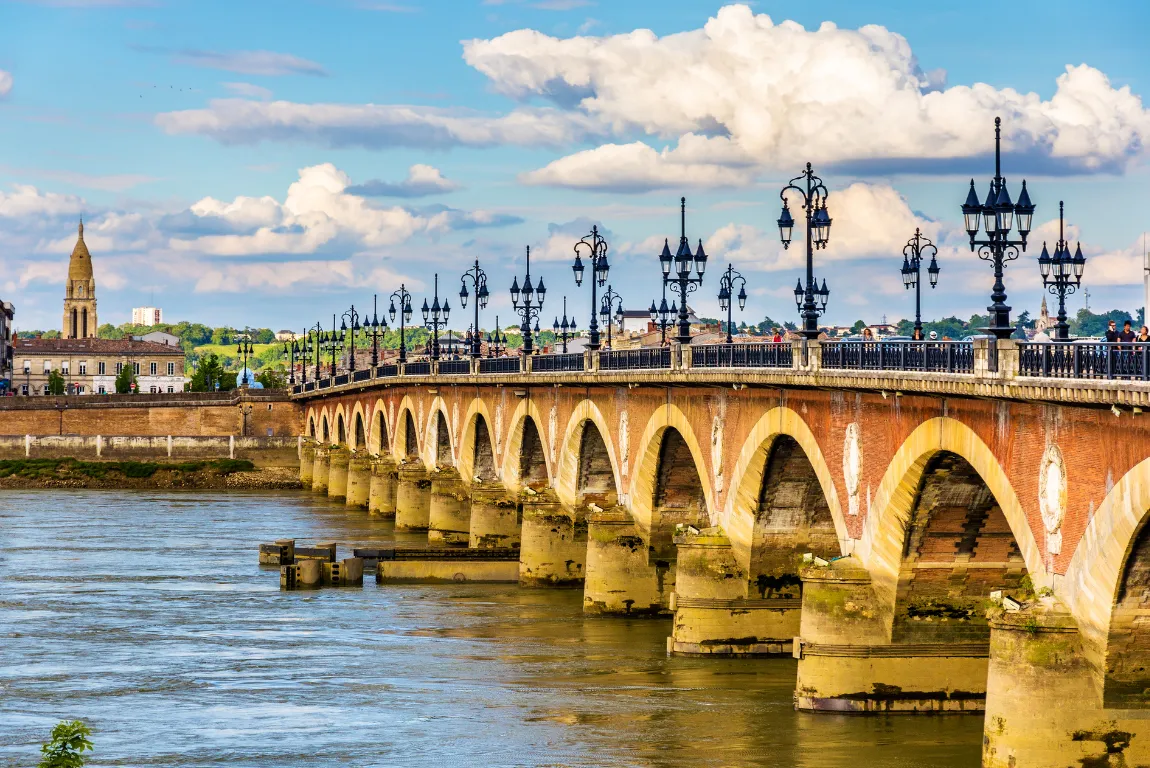
The Pont de Pierre—literally “stone bridge”—was the first permanent Garonne crossing bridge in Bordeaux. Commissioned by Napoléon Bonaparte in the early 19th century, it took over a decade to build, finally opening in 1822. Before this, ferries and small boats were the only ways to cross the fast-moving Garonne.
Its 17 arches (matching the number of letters in “Napoléon Bonaparte”) are built from brick and stone, resting on piers reinforced against the river’s strong currents. For over 150 years, this was the only way to cross the river without a boat.
Today:
- Motor traffic is restricted, making it a safe and pleasant Bordeaux pedestrian bridge.
- Tram line A runs across its centre.
- It is one of the most photographed landmarks in the city.
Travel tip: Combine a crossing with a stop at the right bank’s Parc aux Angéliques for panoramic photos of the historic left bank.
2. Pont Jacques-Chaban-Delmas – The Vertical-Lift Giant
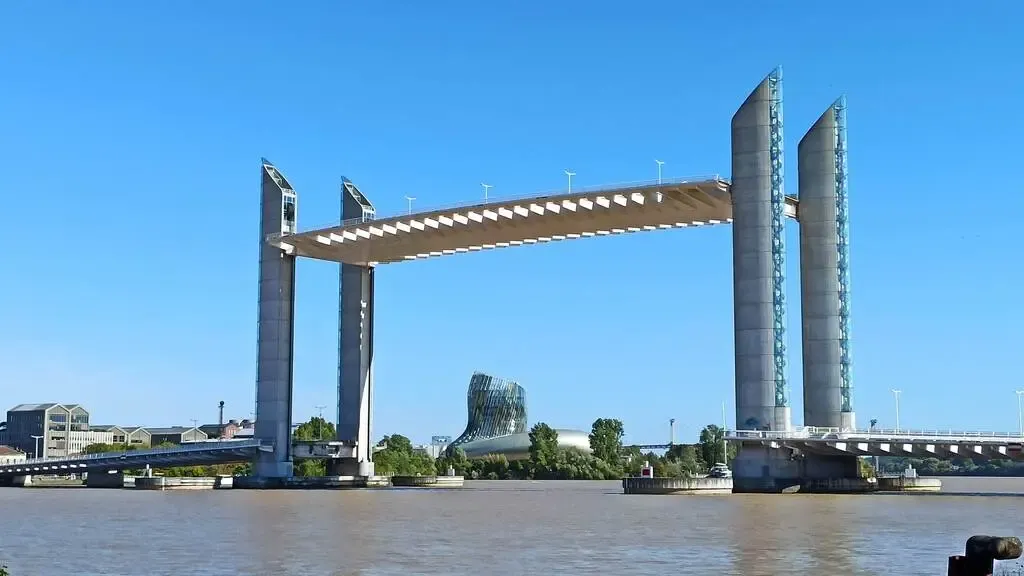
Opened in 2013, the Pont Jacques-Chaban-Delmas is the tallest vertical-lift bridge in Europe. At 575 metres long, its central deck can be raised 55 metres to let cruise ships and tall-masted vessels pass – a process that takes less than 12 minutes.
Its design is both practical and visually striking. Four 77-metre pylons tower above the river, illuminated in blue at high tide and green at low tide. Dedicated pedestrian and cycling paths run along both sides, offering sweeping views as you cross.
Why visit:
- See it lift for passing ships – check the port’s schedule in advance.
- Enjoy its night-time light display from the quays.
- Use it to connect to modern attractions like La Cité du Vin and the Bassins à Flot.
If you're planning to explore this modern riverside district in more depth, read our full guide to spending a day in Bacalan, including Bassins à Flot, Les Halles de Bacalan, and the Bassin des Lumières.
3. Pont d’Aquitaine – The Suspension Bridge
The Pont d’Aquitaine opened in 1967, carrying the A630 motorway as part of Bordeaux’s ring road. With its 53-metre-high towers and long suspension cables, it has the classic silhouette of a suspension bridge and allows large ships to pass underneath.
It isn’t a pedestrian crossing, but you can enjoy excellent views of it from the riverbanks or from the Bastide district. For drivers entering Bordeaux from the north, it offers one of the most dramatic approaches into the city.
Best viewing points:
- From the Quai de Brazza (right bank).
- From river cruises that pass under its span.
4. François Mitterrand Bridge – The Modern Ring-Road Crossing
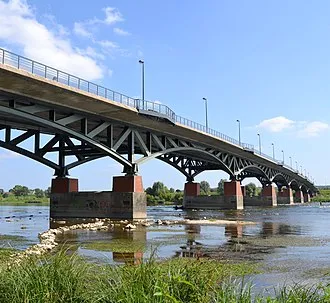
Also known as the Bacalan-Bastide motorway bridge, the François Mitterrand Bridge in Bordeaux was opened in 2008. Designed by the OMA architecture studio, it is sleek and functional, built to carry a high volume of vehicles and complete Bordeaux’s ring road crossing the Garonne.
While it’s not a typical Bordeaux sightseeing bridge, it plays an essential role in reducing congestion in the city centre and connecting outlying districts.
5. Saint-Jean Bridge – Linking the Railways
The Pont Saint-Jean was completed in 1965 to handle road traffic, but it also supports the railway lines approaching Bordeaux’s main train station, Gare Saint-Jean. Built with reinforced concrete, it is sturdy and functional rather than decorative.
For many arriving in Bordeaux by train from the south or east, this is the first bridge they see as the railway line approaches the station. From the riverside, it offers views of trains crossing against the backdrop of the city.
6. Garonne Railway Bridge – Steel and Industry
Built in 2008, the Garonne Railway Bridge serves as a major rail freight and passenger link across the river. Made of steel with massive concrete piers, it carries multiple tracks and helps streamline train traffic to and from Bordeaux.
It’s not a bridge most tourists will cross on foot, but rail enthusiasts may spot it from nearby viewing points on the right bank.
7. Simone Veil Bridge – A New Pedestrian and Cycle Connection
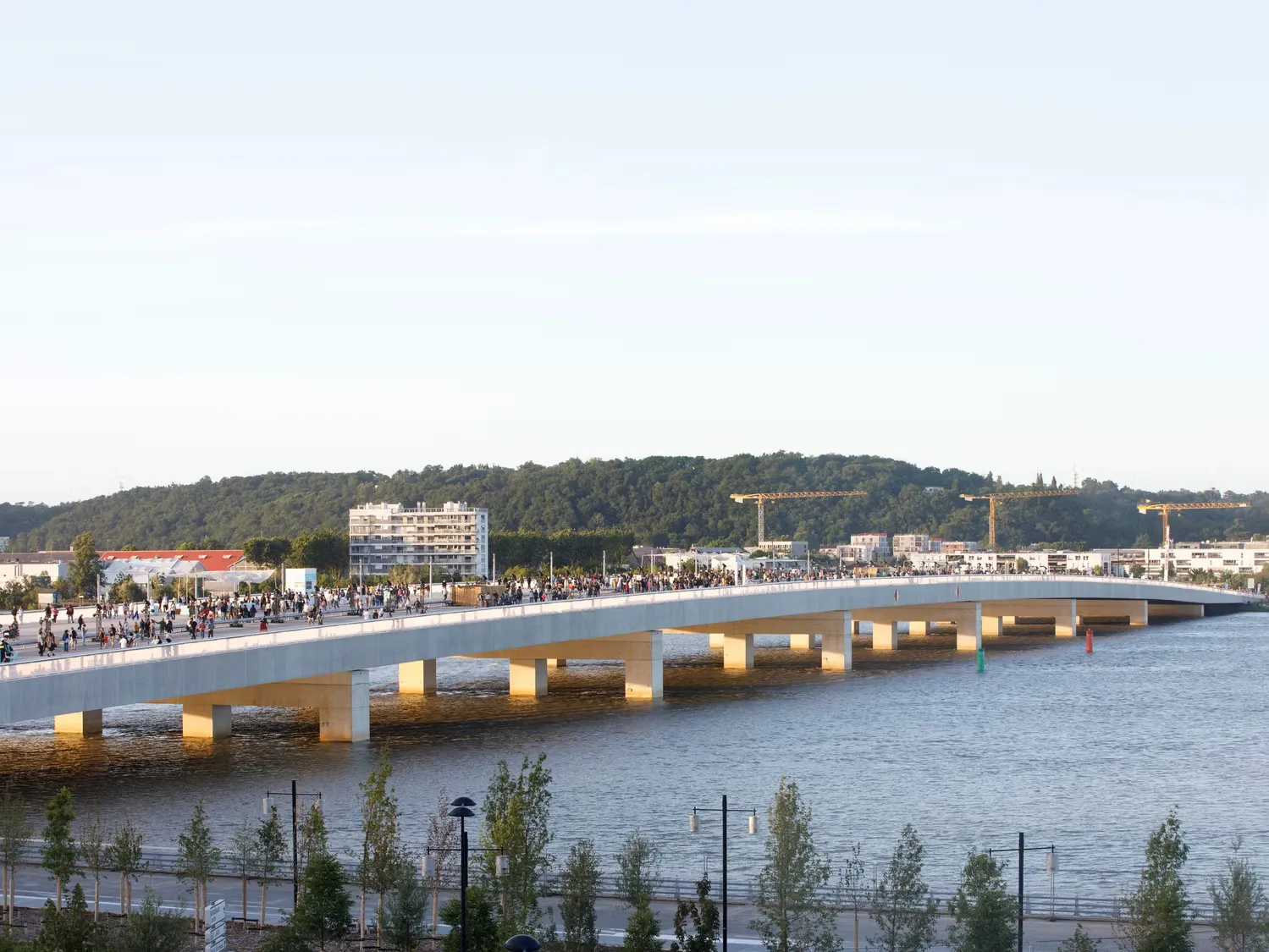
The Simone Veil Bridge is the newest addition to Bordeaux’s infrastructure, designed to prioritise pedestrians and cyclists. With a contemporary steel structure and wide, accessible pathways, it reflects Bordeaux’s focus on sustainable mobility.
When completed, it will be a scenic Bordeaux pedestrian river walk and a practical link between residential areas and commercial hubs.
8. Eiffel Foot Bridge – A Gustave Eiffel Legacy
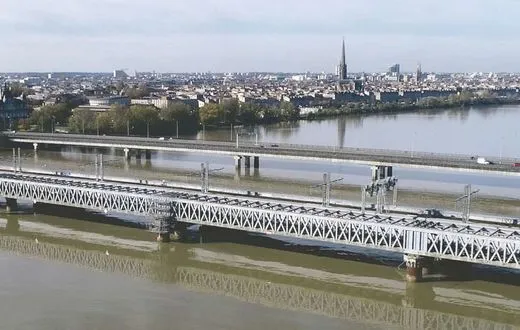
Built in 1860 by the workshops of Gustave Eiffel, the Eiffel Foot Bridge originally carried trains before being converted into a walkway. Its wrought-iron lattice structure is typical of 19th-century industrial design, and today it is a charming walking route bridge for locals and tourists alike.
Crossing it offers great photo opportunities, with uninterrupted views of the river and the city skyline. It’s quieter than the main tourist bridges, making it ideal for a leisurely stroll.
Suggested Walking & Cycling Itinerary
If you want to experience a variety of Bordeaux sightseeing bridges in a single outing, try this loop:
- Start at the Pont de Pierre and cross to the right bank.
- Walk north along the riverside path to the Eiffel Foot Bridge and cross back to the left bank.
- Follow the quays to the Pont Jacques-Chaban-Delmas and cross to the right bank again.
- Continue north for a view of the Pont d’Aquitaine from the riverbank.
Cyclists can extend the loop to pass near the François Mitterrand Bridge and Saint-Jean Bridge, with detours to view the Garonne Railway Bridge and, when open, the Simone Veil Bridge.
Why Explore All Eight Bridges
- Variety: From 19th-century stone and iron to modern steel and concrete.
- Scenic views: The Garonne offers some of Bordeaux’s best city panoramas.
- Urban story: The bridges reflect Bordeaux’s expansion, technological changes, and evolving transport needs.
- Accessibility: Several are part of pedestrian and cycling routes that make for excellent sightseeing days.