Bordeaux’s Secret Tunnels & Cold-War Bunkers
Bordeaux, with its glowing limestone, café terraces and serene quays, carries a calmness that visitors love. But beneath the river views and classical façades lies another Bordeaux — a shadowed one of concrete, steel, underground corridors and hidden wartime structures. Few travellers realise that some of the city’s most dramatic stories sit beneath their feet.
This underground world was carved during turbulent decades. Some spaces are monumental, others forgotten, and a few are so subtle you’d miss them even if you were standing above them. Exploring these subterranean layers reveals a Bordeaux that feels heavier, quieter and more mysterious than the sunlit streets above.
This is a journey into the hidden tunnels and Cold-War bunkers of Bordeaux, exploring real, physical structures that remain tucked under the city’s surface and around its waterfront.
The Underground Identity of Bordeaux
Bordeaux’s position on the Garonne has always made it a strategic location. For centuries, ships docked here, goods moved through its warehouses, and engineers carved storage tunnels beneath the quays. When the 20th century’s conflicts arrived, the city’s geography invited a new kind of architecture: reinforced concrete, secure bunkers, underground passages and supply tunnels.
What Remains Today
- vast wartime constructions
- sealed or forgotten tunnels beneath industrial zones
- maritime storage corridors along the river
- Cold-War era fortified structures
- one of France’s largest surviving submarine bases
Some spaces are public, some are closed, and some exist quietly behind locked gates or beneath redeveloped land. They form a hidden landscape that feels worlds away from Bordeaux’s bright, elegant centre.
The Base Sous-Marine: Bordeaux’s Most Imposing Underground Structure
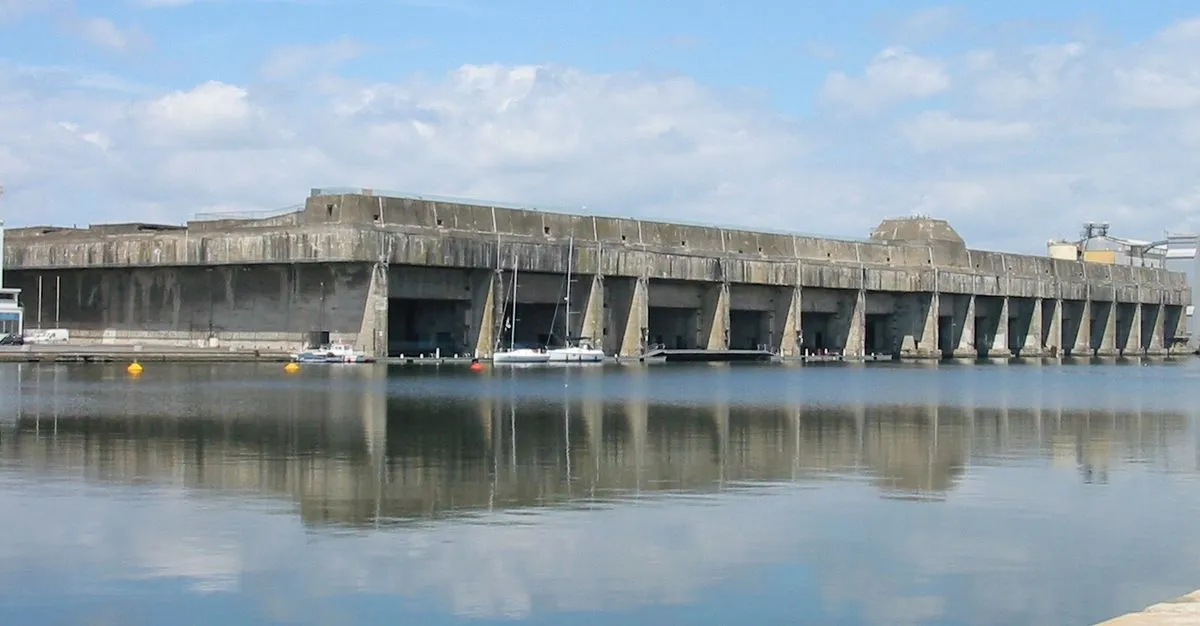
Base sous-marine de Bordeaux
Google Maps: https://maps.google.com/?q=Base+sous+marine+Bordeaux
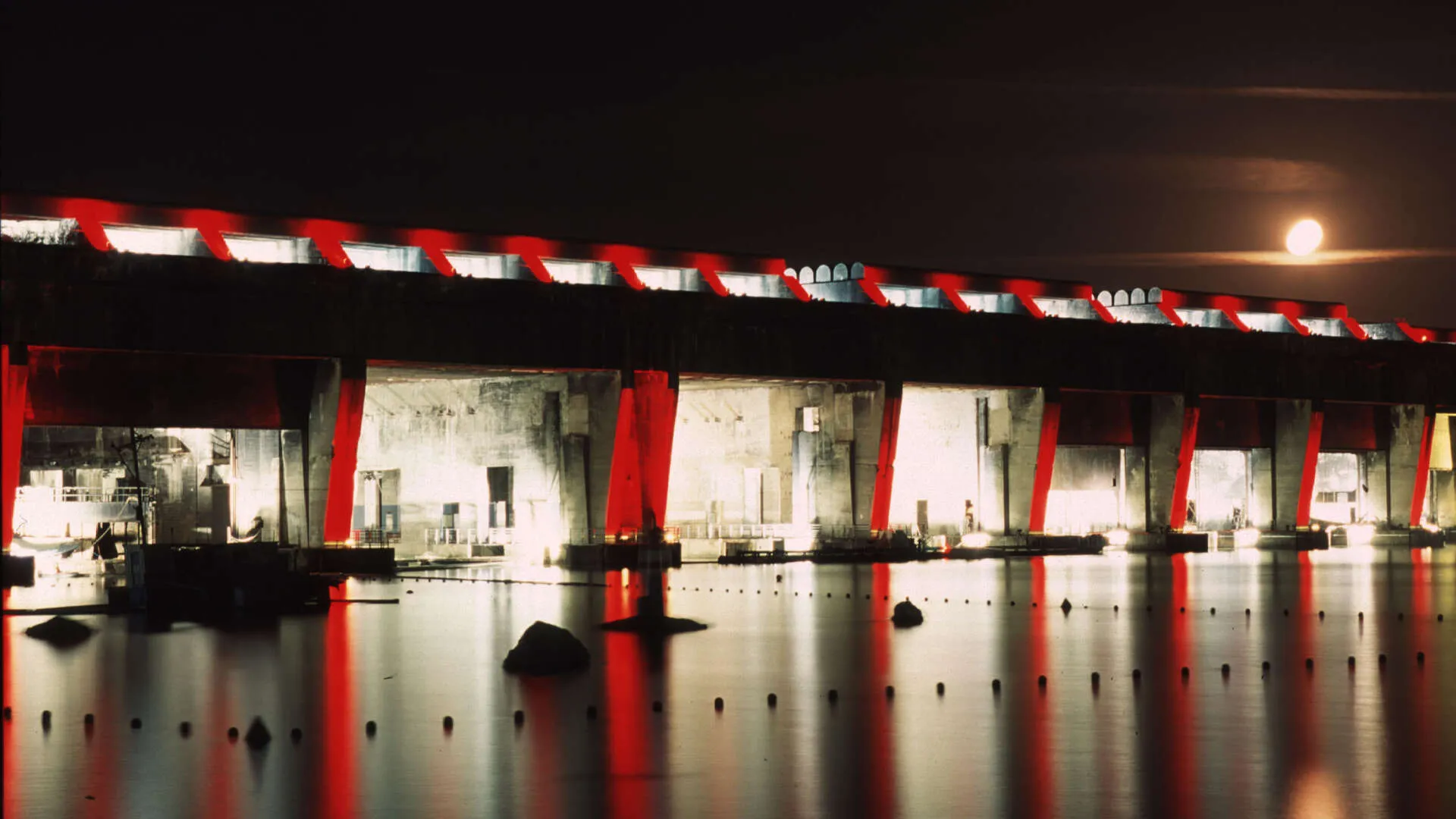
The Base sous-marine is not fully underground, but stepping inside feels exactly like entering a subterranean fortress. Its walls are several metres thick, its corridors stretch into darkness, and its water-filled docks produce a stillness that makes the outside world feel distant.
Built during the Second World War and reinforced with colossal slabs of concrete, the base occupies the northern edge of the Bassins à Flot district. Its scale is difficult to understand until you stand before it: a grey, imposing block, silent and enormous.
Inside the Structure
Walking inside, you enter a world of:
- long, echoing corridors
- towering concrete chambers
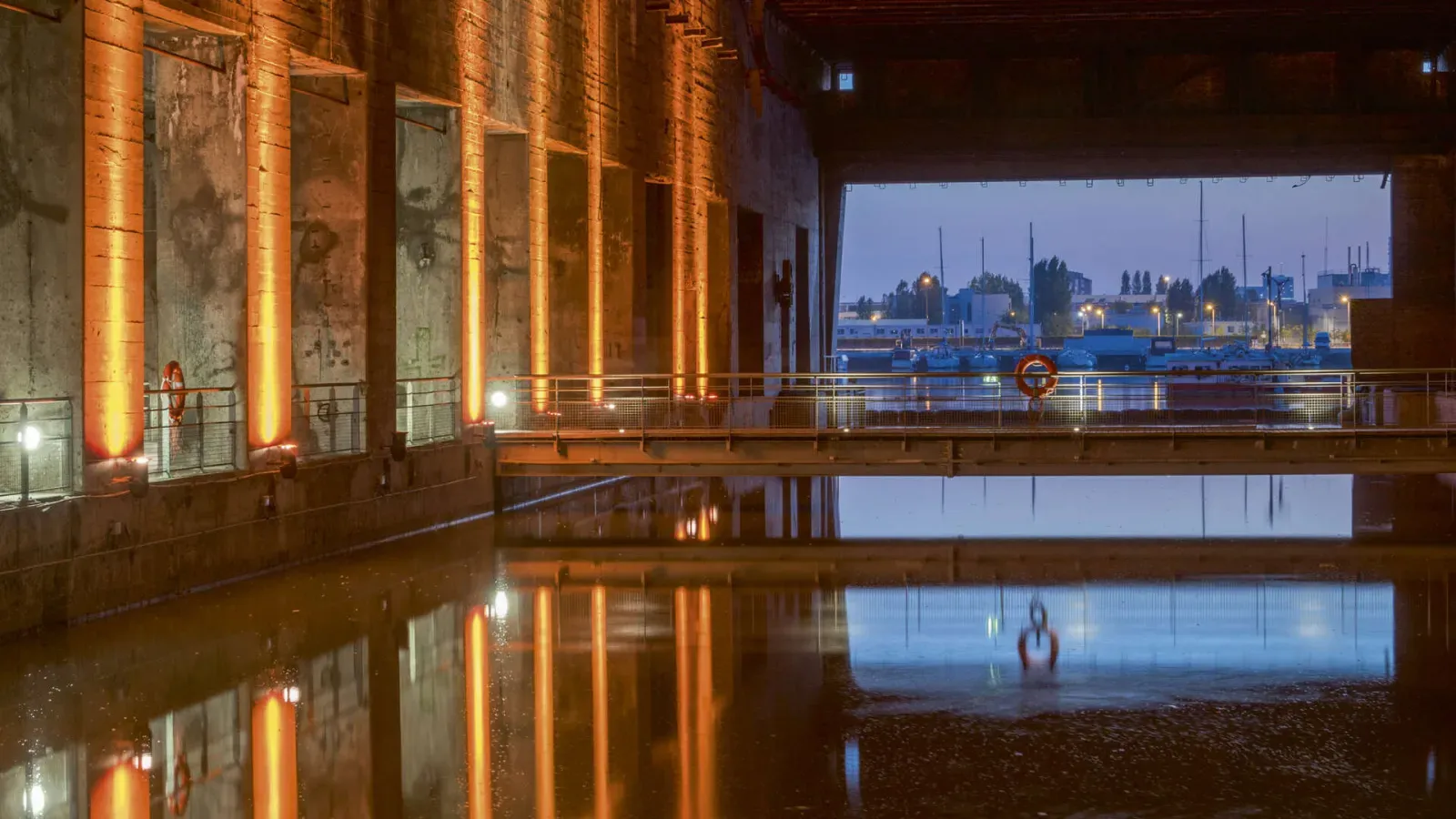
- deep water basins filled with motionless dark water
- walkways suspended above the docks
- shadows cast across the rough stone
The base was designed to be nearly indestructible. Even now, its walls feel as if they could withstand anything. It is a haunting space — one of the most atmospheric in Bordeaux — where light slips down through openings in the ceiling and reflects on the water below.
Why Travellers Visit
Not for glamour or beauty, but for impact.
The base gives a sense of history that feels physical, not distant.
It’s one of the few places in Bordeaux where the city’s underground story rises to the surface.
Tunnel Systems Beneath the Waterfront
Long before modern redevelopment, Bordeaux’s waterfront was a working port filled with warehouses, cellars and hidden storage spaces. Many of these relied on tunnels and subterranean passages carved beneath the quays.
These tunnels were used for:
- wine storage
- goods movement between warehouses
- concealed transport routes
- access to ships
- protection from the elements during loading
The soft ground near the river made deep construction difficult, yet several interconnected corridors existed beneath warehouses and quayside structures. Some have since been sealed or incorporated into modern foundations. Others still sit beneath the waterfront, quiet and forgotten.
The Atmosphere Below
Imagine descending stone steps into a narrow corridor running parallel to the Garonne. The air grows cooler, the ceiling lower. Water drips from the old stone; sound moves slowly. Above you, the modern city buzzes — trams, cafés, walkers — yet down here, darkness clings to the walls.
These tunnels were practical rather than decorative. And their simplicity adds to their allure.
Industrial Tunnels in the Bassins à Flot District
The Bassins à Flot neighbourhood holds some of Bordeaux’s most striking industrial remnants. The former docklands once supported heavy maritime activity, and with it came a network of underground tunnels for pipes, cables and machinery access.
What Remains
Many have been filled during redevelopment, but several reinforced access tunnels — built to support cranes, pumps or electrical systems — still thread beneath the district.
These tunnels:
- follow the lines of old dock basins
- contain ladders, rusted pipes and silent machinery rooms
- offer glimpses of industrial power stations built long ago
They’re closed to the public, but knowing they exist adds a layer of depth to the bright new Bassins neighbourhood. Under the modern restaurants and walkways, the industrial past still lies hidden.
Cold-War Bunkers Around Bordeaux
The Cold War inspired the construction and repurposing of shelters, reinforced rooms, and civil-defence bunkers across France — and Bordeaux was no exception. While the region wasn’t filled with large nuclear shelters like major capitals, it did maintain secure structures designed for communication, command or protection.
Features of These Bunkers
- thick concrete walls
- reinforced ceilings
- narrow ventilation shafts
- steel doors
- emergency exits leading into wooded areas or industrial zones
They were often hidden beneath administrative buildings, inside industrial land or near former military zones around the wider Bordeaux area.
Though most remain sealed, their entrances — concrete protrusions, low doorways, ventilation blocks — can still be spotted by those who know where to look.
Hidden Access Points in the City
Walking through Bordeaux, you may pass one of the following without realising what lies beneath:
1. Small concrete outbuildings near old industrial sites
Often, ventilation shafts or maintenance entrances are used for underground tunnels.
2. Metal grilles in unexpected places
Some lead to disused storm tunnels or sealed supply corridors.
3. Low, bunker-style structures in wooded areas
Especially near former military or industrial land.
4. Narrow staircases descending beneath old quays
Some were once used by workers moving between the river level and the warehouse cellars.
5. Reinforced doors behind buildings
Screens or metal shutters cover what once led to service tunnels.
Most passers-by never notice them. But if you slow down, the hints become easy to spot.
Atmosphere: The Feeling of Bordeaux Underground
Exploring these places — even the ones open to visitors — feels like stepping into a different world.
The Sound
- footsteps echo
- water drips in rhythmic patterns
- silence wraps around corners
- Heavy air dampens everything
The Light
- thin shafts from above
- reflections on still water
- shadows falling across concrete
The Smell
- damp stone
- cold metallic surfaces
- the faint mineral scent of the river
Above ground, Bordeaux is soft and golden.
Below ground, it is heavy, cool and almost cinematic.
How the Underground Shaped the City Above
The hidden tunnels and bunkers influenced Bordeaux’s landscape in several ways:
1. The Shape of Bassins à Flot
Industrial tunnels and underground service rooms dictated where cranes, docks and rail systems were built. Modern redevelopment still follows many of those lines.
2. Reinforced Zones Along the Quays
Areas requiring heavy foundations were often placed above old passages, shaping the organisation of warehouses and eventually the modern riverfront.
3. The Placement of Technical Buildings
Many infrastructure buildings were positioned above or beside underground systems.
4. The City’s Post-War Development
Cold-War bunkers, though hidden, influenced urban planning decisions around utilities and emergency access.
Understanding this underground network reveals how Bordeaux’s visible calm was built on an invisible structure.
Exploring Bordeaux’s Underground Today
Not all tunnels or bunkers are accessible — many remain sealed or unsafe — but travellers can still experience the underground world through the structures that are open and visible.
1. The Base Sous-Marine
The most accessible of the city’s underground-adjacent structures.
You feel submerged in a concrete world where silence becomes part of the architecture.
2. The Quays
Walking along the Garonne, you’ll pass restored façades of warehouses that once connected to underground storage rooms and cellar networks.
3. Bassins à Flot
Here, the contrast between modern redevelopment and historic industrial architecture is striking. Above ground, the area is lively and youthful. Below, old tunnels still hold the memory of docks, boats and goods movement.
To understand how this industrial waterfront transformed from working docks into a vibrant cultural area — including the Base sous-marine and hidden histories beneath — explore our guide to a day in Bacalan, where we trace the district’s evolution and its profound connection to Bordeaux’s maritime past.
4. Hidden Entrances
If you keep your eyes open, you’ll spot sealed doors and mysterious ventilation structures hinting at what lies beneath.
A Journey Above & Below
One of the best ways to understand Bordeaux’s hidden underground is to experience the surface first. Seeing the architecture, quays, districts, and riverfront gives context to the structures below.
Exploring the city with a welcoming local guide from Bordeaux Free Walking Tours is an engaging way to connect the visible layers of Bordeaux before thinking about what lies underneath:
https://bordeauxfreewalkingtours.com/
After walking the bright, open spaces of the historic centre, turning to the city’s underground feels even more dramatic.
Imagining a Descent into Bordeaux’s Hidden Depths
Picture yourself walking along the Bassins à Flot area. The late afternoon sun colours the water bronze. The surface is lively: cyclists passing by, cafés opening, modern buildings reflecting light.
Then you step through a concrete doorway into the Base sous-marine.
Instantly, the air thickens. The sound changes. Light filters in sharp strips. You walk along a high platform, water glinting below. Ahead, a long corridor stretches into darkness.
As your eyes adjust, you feel time pressing close — not the time of polished façades or river cruises, but deeper, heavier history. The underground voice of Bordeaux.
When you return to daylight, the city feels different. More complex. More storied. More alive.
Why Bordeaux’s Underground Matters
The tunnels and bunkers beneath Bordeaux reveal dimensions of the city that architecture and wine alone cannot express.
They show resilience.
These structures were built to withstand pressure and conflict.
They reveal transformation.
Former wartime spaces now sit beneath cultural districts and modern developments.
They remind us of unseen stories.
Bordeaux’s calm exterior hides layers of tension, labour and engineering.
They connect past and present.
The underground network is an unspoken companion to the city’s luminous surface.
They deepen the travel experience.
Understanding what lies beneath makes every river walk and quayside view more meaningful.
A Final Reflection on Bordeaux’s Secret Tunnels
Bordeaux is often described in sunlight: its golden buildings, its elegant boulevards, its luminous evenings along the river.
But the city’s soul is also shaped by the spaces beneath it — by the tunnels that supported its port, by the bunkers that stood watch through difficult decades, and by the monumental Base sous-marine that remains a silent reminder of wartime intensity.
Travellers who explore these hidden layers discover a Bordeaux that is deeper, more complex and unexpectedly moving.
And if you want to understand the entire story — the bright façades above and the shadows below — walking with Bordeaux Free Walking Tours offers a meaningful way to start that journey:
https://bordeauxfreewalkingtours.com/
In Bordeaux, light and shadow coexist.
The city’s beauty is not only what shines, but also what lies quietly beneath.