Bordeaux’s Population Today: Growth, Trends & How the City Has Transformed
Bordeaux is widely celebrated for its architecture, wine culture and refined lifestyle — but behind its beauty lies a city that has undergone one of the most remarkable demographic transformations in France. The current population of Bordeaux reflects decades of expansion, urban renewal, migration, cultural influence and economic development, all of which have reshaped the city into a thriving, youthful, cosmopolitan hub.
Understanding Bordeaux today requires exploring how the city grew, how neighbourhoods transformed, and how locals live alongside students, new arrivals, and increasing international residents. This long-form guide examines Bordeaux’s population evolution, the forces behind its rapid growth, and the social landscape that defines life in the southwest of France.
The Current Population of Bordeaux
Bordeaux City (Intra-Muros)
Bordeaux proper — the central municipality — has a population of roughly 260,000 residents. This number fluctuates slightly year to year, but the trend has been consistent: steady growth since the early 2000s.
The Bordeaux Metropolitan Area (Bordeaux Métropole)
When including surrounding communes such as Mérignac, Pessac, Talence and Cenon, the greater metropolitan area rises to nearly 850,000 inhabitants.
This metro zone is one of the fastest-growing urban areas in France, with projections suggesting it may reach 1 million residents within the next decade.
A Younger Population Than Many French Cities
Bordeaux has a noticeably youthful demographic. Students from major universities, young professionals moving for work, and international arrivals all contribute to a population with an energetic cultural rhythm.
High-search keywords: Bordeaux population, living in Bordeaux, Bordeaux demographics
Historical Shifts That Shaped Bordeaux’s Population
Population change in Bordeaux wasn’t linear. The city experienced periods of booming growth, stagnation, and revival. Understanding these cycles helps explain the city that exists today.
Bordeaux in the 18th Century: Wealth, Trade and Expansion
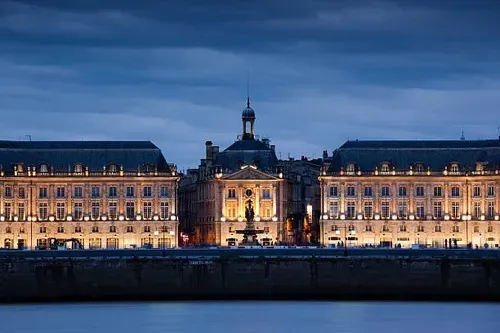
During the Age of Enlightenment, Bordeaux thrived as one of Europe’s most important ports. Trade — wine, textiles, commodities — brought wealth that fuelled urban development, inspiring the construction of monumental squares such as Place de la Bourse.
The population boomed during this time. The city became an economic powerhouse, attracting merchants and craftsmen from across France and beyond.
19th Century: Industrial Growth and Urban Density
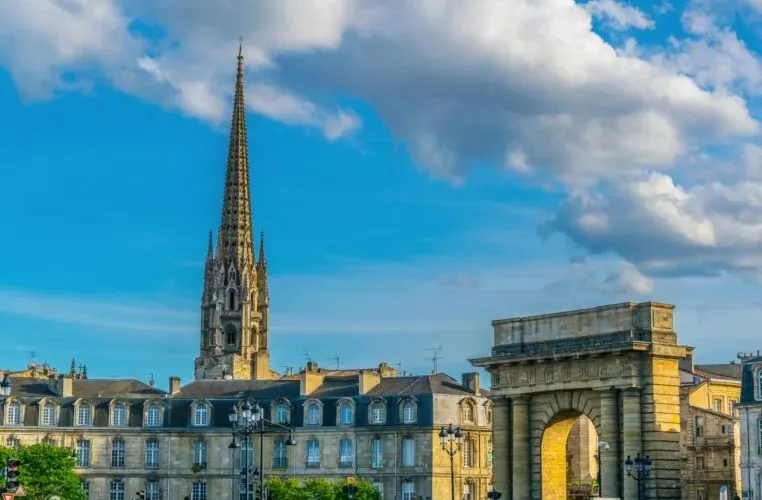
Industrialisation brought railways, factories and new neighbourhoods. Areas like Saint-Michel saw population density increase as workers settled near the city centre.
Immigration from rural France contributed to a more diverse population, while the opening of new boulevards created the urban structure still visible today.
20th Century Decline: Suburbanisation and Economic Shifts
After WWII, like many French cities, Bordeaux experienced population decline due to suburbanisation. Residents moved to nearby towns such as Mérignac or Pessac, seeking larger homes and green space.
By the 1970s and 1980s:
- Factories closed
- The port lost influence
- Traffic and pollution affected liveability
- Many historic buildings were darkened by pollution
The population dipped significantly, particularly in the historic centre.
This decline would later set the stage for an extraordinary transformation.
The Bordeaux Renaissance: Urban Revival and Population Return
Beginning in the late 1990s and accelerating through the early 2000s, Bordeaux underwent an extensive urban revival often referred to as the “Bordeaux Renaissance.”
What changed:
- The tram system was introduced
- Quays along the Garonne were redeveloped
- Buildings were cleaned, revealing blonde limestone
- Car traffic was reduced
- Public spaces were revitalised
- Creative neighbourhoods emerged
This attracted:
- Young professionals
- Artists
- Families returning from the suburbs
- International arrivals
- Students seeking a dynamic university city
For the first time in decades, the population of Bordeaux began to grow quickly.
The Student Influence: A City That Feels Young
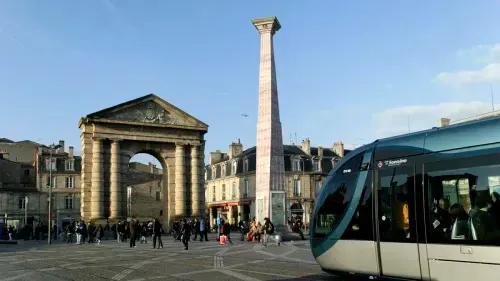
As home to major institutions like the Université de Bordeaux, KEDGE Business School and Sciences Po Bordeaux, the city now includes over 100,000 students within the metropolitan area.
This dramatically influences the atmosphere of neighbourhoods like:
Saint-Pierre
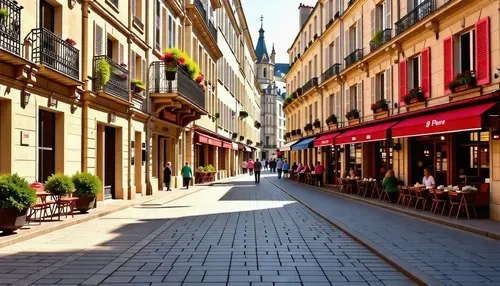
Map: Saint-Pierre
Lively squares, bars and cafés help maintain a youthful spirit in the historic centre.
Victoire
Map: Place de la Victoire
A hub for nightlife, affordable restaurants and student housing.
Talence
Map: Talence
Home to major university campuses and a large student population.
Students contribute to the city's dynamic identity, ensuring that Bordeaux feels young despite its historic appearance.
Migration, International Communities and Changing Identity
One of the biggest drivers of Bordeaux’s recent population growth is internal migration from other parts of France, especially Paris.
Why do people move from Paris to Bordeaux?
- Lower cost of living
- Better quality of life
- Warmer climate
- Less congestion
- Emerging tech and job sectors
- Beautiful environment
This movement has reshaped the city’s demographic profile, introducing new businesses, ideas and cultural influences.
International arrivals
Bordeaux increasingly attracts residents from:
- The UK
- Spain
- Portugal
- Germany
- Italy
- North Africa
- West Africa
- Canada
- The United States
This multicultural presence enriches food markets, festivals and neighbourhood communities.
Population Distribution Across Neighbourhoods
Bordeaux’s population is not evenly distributed. Each neighbourhood has evolved differently, creating unique micro-cultures.
Historic Centre (Saint-Pierre, Saint-Paul, Hôtel de Ville)
The population here has risen sharply due to renovated apartments, cultural revival, and tourism growth. Streets are lively, especially around Place du Parlement and Rue Saint-Rémi.
Chartrons
Once a quiet district of wine merchants, Chartrons now attracts young professionals and families. Cafés, design shops and riverside paths draw both locals and travellers.
Map: Chartrons
Saint-Michel
More diverse and multicultural, Saint-Michel has seen rapid demographic change as young people, artists and entrepreneurs settle alongside long-established communities.
Bacalan
The arrival of La Cité du Vin and food hall Les Halles de Bacalan has sparked new residential growth. Modern housing developments attract a younger demographic.
Caudéran
Often described as Bordeaux’s “village in the city,” Caudéran is more residential and family-oriented, with parks, schools and quieter streets.
How Transportation Shaped Population Change
The introduction of the tram system dramatically influenced population growth. Areas connected by the tramline became more attractive for living, cycling and commuting.
High-search keyword: Bordeaux tram
Neighbourhoods along the lines — such as Bacalan, Talence and Mérignac — experienced population increases as accessibility improved.
Economic Growth and Job Markets
Bordeaux once relied heavily on its port and wine industry. Today, population growth is driven by:
- Tech start-ups
- Digital industry
- Aeronautics (especially in Mérignac)
- Tourism
- Higher education
- Hospitality
- Creative industries
This diversification attracts new residents and keeps young people from leaving after university.
Population Challenges: Housing, Prices and Urban Pressure
Rapid population growth brings challenges. Locals sometimes express concern about:
- Rising housing costs
- Gentrification of neighbourhoods
- Pressure on trams and public transport
- Tourism crowds in the historic centre
- Noise in lively districts
Bordeaux is now addressing these issues through new housing projects and updated mobility plans.
How Travellers Experience Bordeaux’s Population Story
Visitors often notice the blend of history, youth and creativity. To understand the city more deeply, many join Bordeaux Free Walking Tours, which explore how the city evolved through its golden age, decline, and revival.
Learning how Bordeaux rebuilt itself helps travellers appreciate:
- The cleaned limestone façades
- The restored squares
- The modern tram network
- The creative riverside spaces
- The energy of local markets
A free walking tour of Bordeaux connects all these elements into a unified story.
Bordeaux’s Future Population: What Comes Next?
Current projections show Bordeaux Métropole exceeding 1 million residents within the next decade. The city is preparing for:
- More green mobility
- Expanded tram lines
- Greater investment in cycling
- Continued cultural growth
- New residential zones
- Modern urban development
With its quality of life, job opportunities and cultural vibrancy, Bordeaux is expected to remain one of France’s most desirable cities for years to come.
Final Reflections: A City Transformed by Its People
The story of Bordeaux is the story of its population — from historic traders to modern students, from artisans to digital entrepreneurs, from long-established families to newcomers from across France and the world.
Today, life in Bordeaux is shaped by this dynamic mix. It is a city that feels elegant yet youthful, historic yet innovative, calm yet creative. Understanding its population evolution helps visitors experience Bordeaux with a deeper appreciation.
To explore how these demographic shifts influence everyday rhythm, neighbourhood culture and lifestyle, read our in-depth guide to life in Bordeaux, which takes a closer look at how residents experience the city daily.
Whether you wander through lively markets, explore quiet residential streets, or join a guided walk through the historic centre, you are witnessing a city continually shaped by the people who call it home.